
How to style a bookshelf: The art of balancing books, ceramics, decorative objects and negative space in tropical hotels, resorts, apartments and holiday villas.
A beautifully styled bookshelf can transform an ordinary corner into one of the most interesting features of an interior. It can add personality to a hotel lobby, warmth to a holiday apartment or a sense of understated luxury to a tropical villa.
But there is a fine line between a thoughtfully curated bookshelf and a collection of objects that simply look like they have nowhere else to go.
The secret isn’t having fewer beautiful things. It’s knowing where to place them, how to group them and, perhaps most importantly, when to leave space empty.
At Kaotika Staging, we believe that successful styling is about creating visual harmony. Every object should have a reason to be there, every shelf should contribute to the overall composition, and the entire piece should feel effortless rather than overdecorated.
Here is how to achieve that balance.
1. Think of the Bookcase as a Composition, Not a Storage Unit
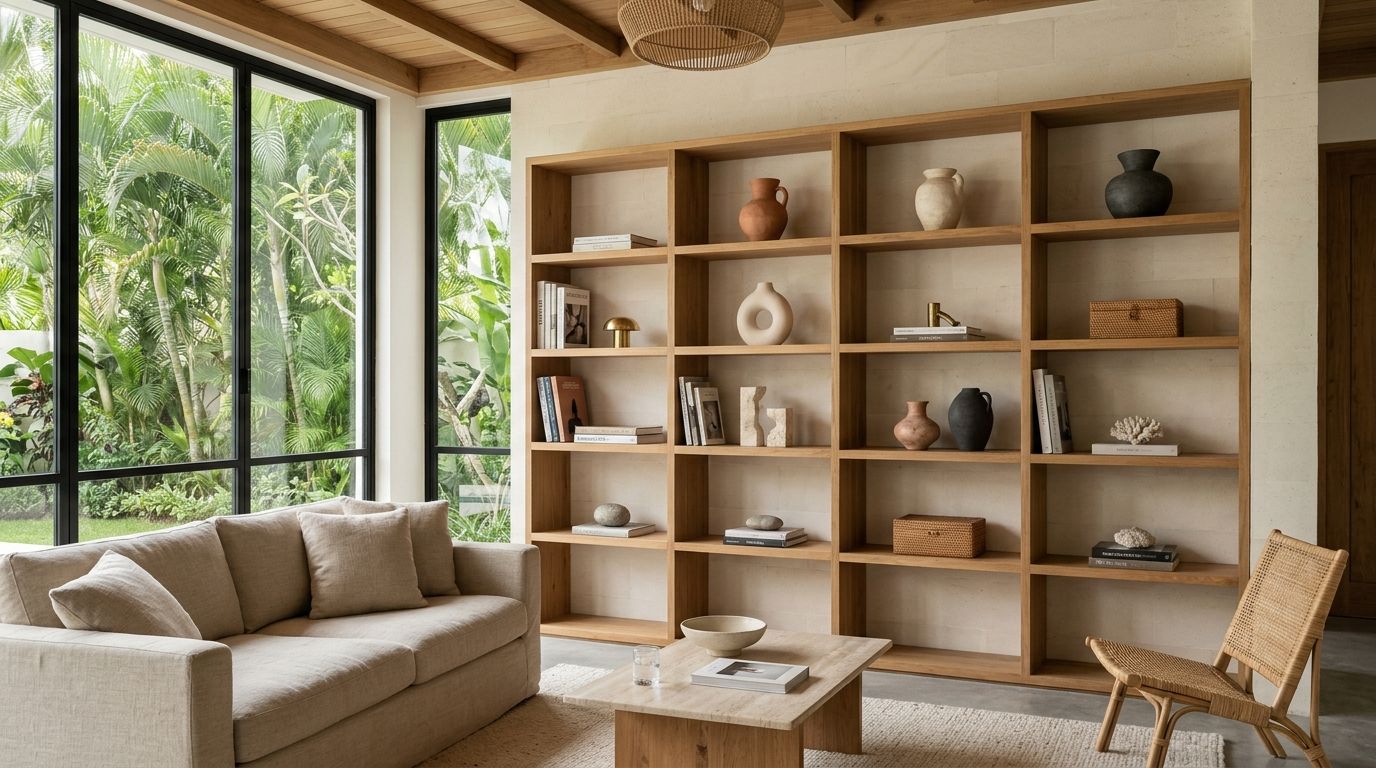
One of the most common mistakes when styling a multi-shelf bookcase is treating every shelf as an independent space that needs to be filled.
The result? Too many objects, too many competing focal points and no clear visual rhythm.
Instead, think of the entire bookcase as one composition.
Imagine looking at it from a distance. Your eye should move naturally from one shelf to another, discovering different shapes, textures and heights without feeling overwhelmed.
A practical starting point:
- Leave some shelves relatively light.
- Create small groups of objects rather than spreading everything individually.
- Alternate between horizontal and vertical arrangements.
- Distribute visual weight across the entire structure.
- Avoid placing all the decorative objects at eye level.
For example, if the upper shelf features a large sculptural ceramic vase, balance it with a smaller arrangement of books or a natural decorative object on a lower shelf.
The aim is not perfect symmetry. It is visual balance.
2. Mix Books, Ceramics and Decorative Objects with Intention
Books are one of the easiest ways to bring character into a bookshelf. They introduce colour, texture and a sense of lived-in sophistication.
However, arranging every book vertically, side by side, can make the composition look flat and repetitive.
A better approach is to combine different arrangements.
Try these three combinations:
The horizontal stack
Place two or three carefully selected books horizontally and use the top one as a base for a small ceramic object, a sculptural piece or a decorative bowl.
This works particularly well on lower or middle shelves.
The vertical arrangement
Group books vertically, but leave a little breathing room at one end. Add a small object to interrupt the line and create visual interest.
The mixed arrangement
Combine a short horizontal stack with a small row of vertical books. This creates different heights and gives the shelf a more relaxed, editorial appearance.
For tropical hospitality interiors, consider books about architecture, photography, travel, local culture, botanical art and the surrounding landscape.
They are not simply decorative accessories. They help tell the story of the destination.
3. Introduce Ceramics and Natural Materials
Ceramics are particularly effective when styling shelves in tropical environments.
Their organic shapes, subtle imperfections and tactile finishes bring depth to an interior without introducing unnecessary visual noise.
Think of:
- Handcrafted ceramic vases.
- Matte stoneware bowls.
- Sculptural objects in natural clay.
- Small decorative pieces inspired by local craftsmanship.
- Textured pieces in sand, ivory, terracotta and warm earthy tones.
Pair these with natural materials such as wood, rattan, linen, stone or woven fibres.
For example, imagine a warm oak bookcase in a tropical villa:
A stack of architecture books, a handmade sand-coloured ceramic bowl and a small sculptural wooden object create a sophisticated arrangement without looking overly styled.
A useful styling rule: Combine different shapes, but keep a connection between their colours, materials or finishes.
Three objects with different silhouettes can look beautiful together if they share a similar tonal palette.
In humid tropical climates, however, material selection matters just as much as appearance. Avoid placing delicate untreated materials, moisture-sensitive paper or porous decorative pieces in exposed areas where condensation and humidity may cause damage.
Choose finishes and accessories that are appropriate for the environment and easy to maintain.
4. The Importance of Negative Space: Let Your Shelves Breathe
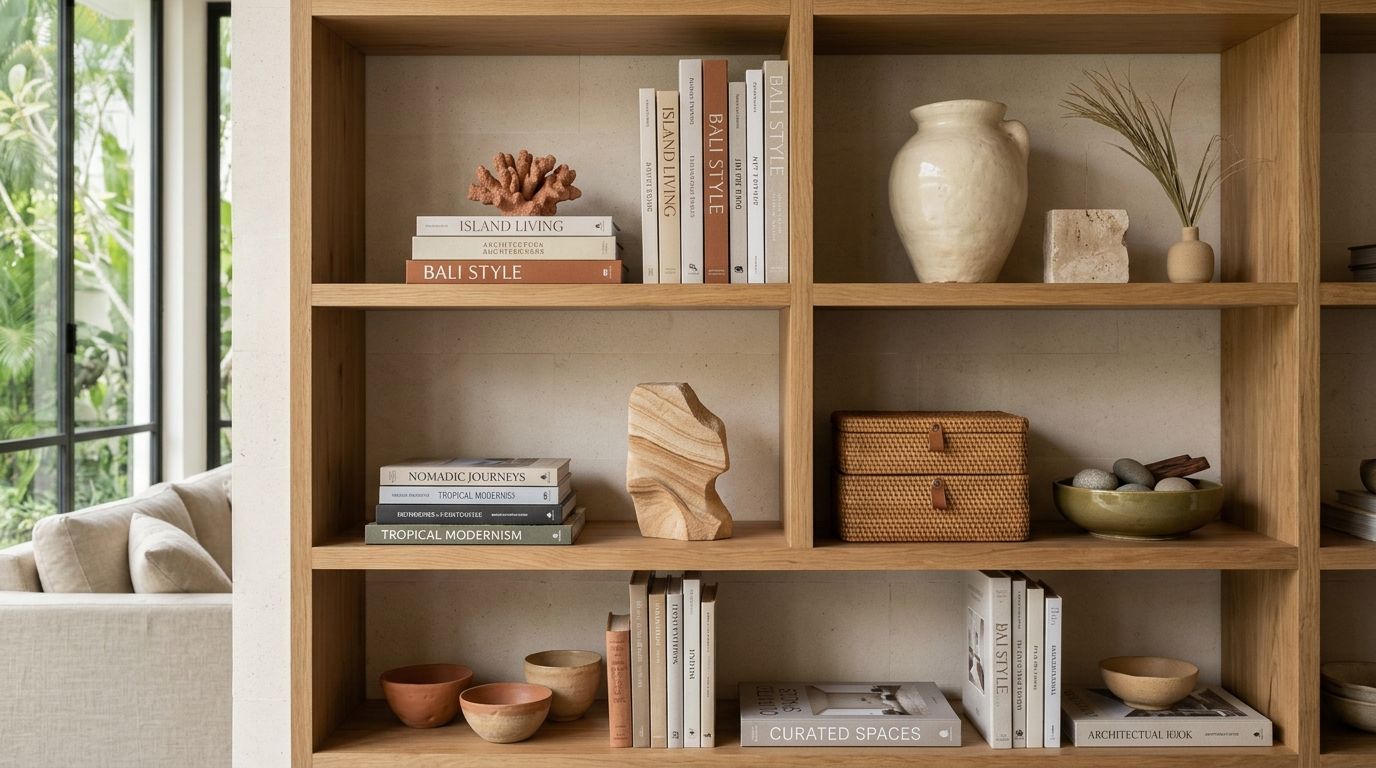
This is probably the most important principle of all.
Empty space is not wasted space.
In fact, it is what allows beautiful objects to stand out.
When every shelf is filled from one end to the other, individual pieces lose their presence. The eye has nowhere to rest, and even expensive decorative objects can look ordinary.
Negative space creates contrast, gives objects importance and makes the entire composition feel more sophisticated.
A practical example:
Instead of filling a shelf with six small decorative accessories, choose just two:
- One medium-sized ceramic vase.
- One smaller sculptural object.
Place them slightly off-centre, leaving the remaining area empty.
The result is quieter, more intentional and considerably more elegant.
For luxury hotels, resorts and holiday villas, this approach is particularly effective. Guests should experience a sense of calm and openness, not the feeling of entering a showroom crowded with accessories.
5. Create Visual Rhythm Across Different Shelf Heights
A multi-shelf bookcase needs variety.
If every shelf follows exactly the same formula, the result can feel repetitive. But if every shelf is completely different, the overall composition may become chaotic.
The solution is to create a visual rhythm.
Think about alternating:
- Tall objects with low objects.
- Full shelves with more minimal ones.
- Organic shapes with clean geometric lines.
- Horizontal book arrangements with vertical ones.
- Light colours with deeper natural tones.
Example: A five-shelf tropical villa bookcase
Shelf 1 – A light introduction
A single sculptural ceramic vase in an ivory or sand tone. Keep the rest of the shelf open.
Shelf 2 – Books and texture
A small collection of travel and design books arranged vertically, with two books stacked horizontally at one end.
Shelf 3 – The focal point
A larger handmade ceramic bowl paired with a small natural wood sculpture. This becomes the visual centre of the bookcase.
Shelf 4 – A more relaxed composition
A horizontal stack of books, a small decorative object and an open area that allows the arrangement to breathe.
Shelf 5 – A grounded finish
A larger woven basket or a substantial ceramic piece, depending on the height and depth of the shelf.
Notice that not every shelf has the same number of objects. That is intentional.
The composition feels balanced because the visual weight is distributed throughout the bookcase.
6. Bring the Tropical Environment into the Styling
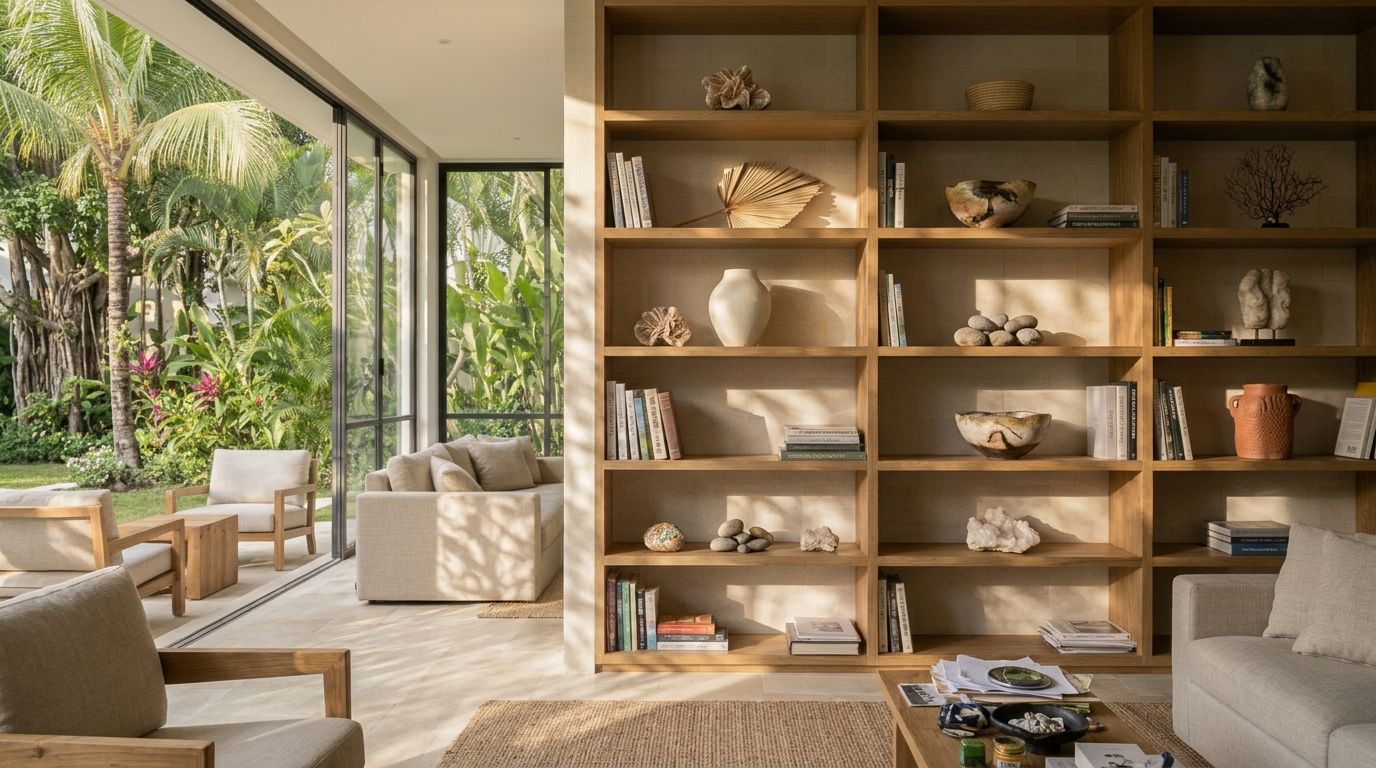
A tropical interior should feel connected to its surroundings.
This doesn’t mean decorating every shelf with palm leaves, seashells or exotic souvenirs. In fact, that approach can quickly become predictable.
Instead, interpret the tropical atmosphere through materials, textures, colours and carefully selected details.
Consider incorporating:
Natural textures
Rattan, teak, reclaimed wood, woven fibres, linen and handcrafted ceramics.
A relaxed colour palette
Warm whites, sandy beige, soft olive, muted green, terracotta and natural wood tones.
Local character
Books about the destination, locally made ceramics, artisan objects and carefully selected pieces that reflect the culture of the region.
Subtle botanical references
A sculptural branch, a small botanical artwork or a carefully positioned plant can introduce a connection with nature.
If you choose to include plants, make sure the species is suitable for the available light and that watering and drainage can be managed without damaging books or furniture.
The goal is to create a tropical atmosphere that feels refined rather than themed.
7. Common Bookshelf Styling Mistakes (And How to Fix Them)
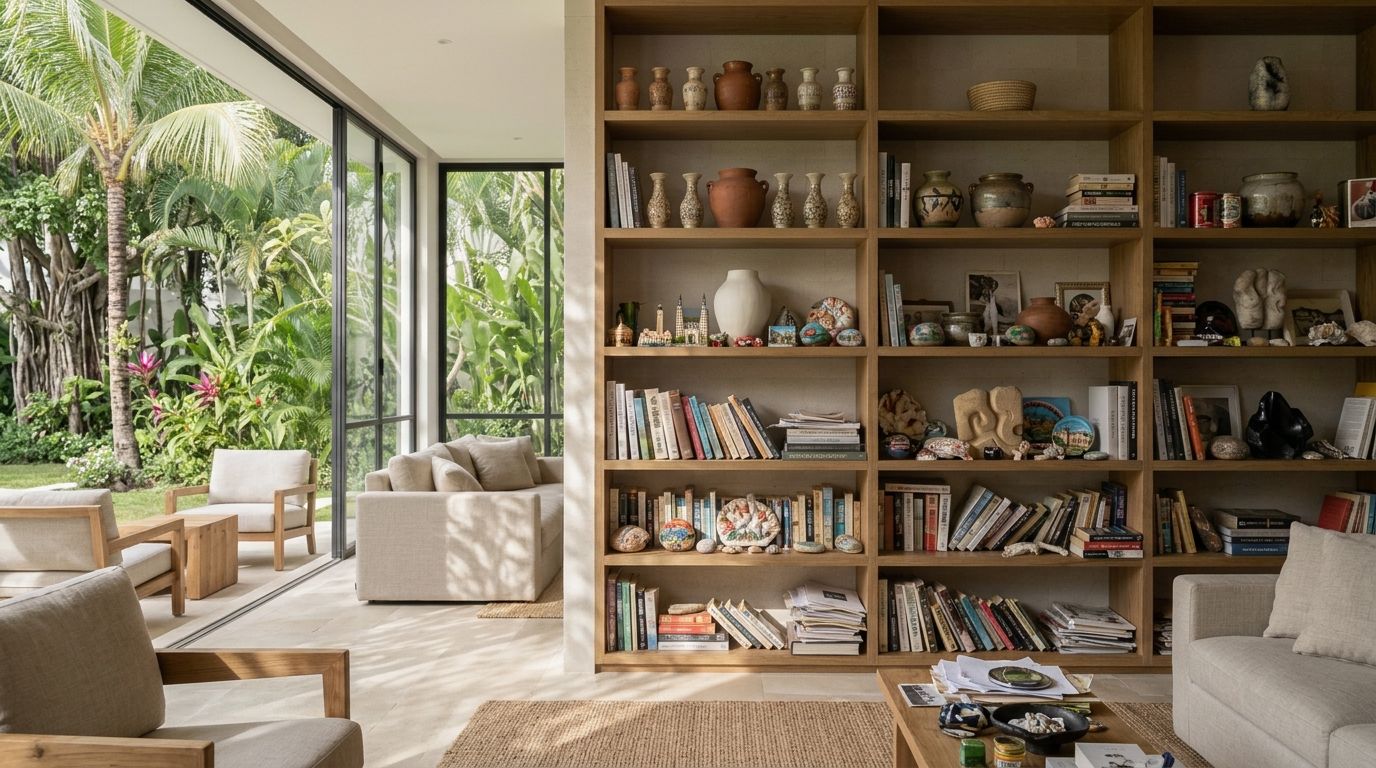
Even beautiful furniture and expensive accessories can lose their impact when the arrangement is not properly considered.
Here are some of the mistakes we frequently encounter when styling hospitality interiors.
Mistake 1: Filling every shelf
The problem: Every available centimetre is occupied by books, ornaments and decorative accessories.
The solution: Remove around a third of the objects as a starting point. Reassess the composition and introduce negative space. You will often find that the remaining pieces look much more impressive.
Mistake 2: Using objects that are all the same height
The problem: The arrangement looks flat, repetitive and predictable.
The solution: Introduce height variation. Combine a tall vase, a low bowl, horizontal books and smaller sculptural objects.
Mistake 3: Creating too many small decorative groups
The problem: Several tiny arrangements compete for attention, making the bookshelf look busy.
The solution: Consolidate them into fewer, more intentional compositions. A group of three objects with different heights and shapes often works better than six unrelated accessories.
Mistake 4: Matching everything perfectly
The problem: Identical vases, symmetrical book arrangements and repeated decorative objects can make the result feel artificial.
The solution: Keep a consistent colour palette but introduce variation in shapes, finishes and materials. Aim for harmony rather than uniformity.
Mistake 5: Ignoring the surrounding interior
The problem: The bookcase looks disconnected from the furniture, lighting and materials around it.
The solution: Repeat one or two elements from the wider space. For example, if the room features oak furniture and linen upholstery, introduce wooden accessories and warm neutral ceramics.
Mistake 6: Choosing accessories that are impractical for tropical climates
The problem: Delicate paper, untreated wood, natural fibres or moisture-sensitive objects deteriorate in humid environments.
The solution: Select durable materials, avoid direct exposure to moisture and ensure that the shelving area has adequate ventilation. In coastal locations, also consider salt exposure and the maintenance requirements of metal finishes.
Mistake 7: Forgetting functionality
The problem: Beautifully arranged books and accessories make it difficult to reach items or clean the shelves.
The solution: Leave practical access areas, avoid overcrowding and use stable objects that can be easily removed for routine housekeeping.
8. Styling Bookshelves for Hotels, Resorts and Holiday Rentals
In hospitality design, a bookshelf does more than decorate a room. It contributes to the guest experience.
It can make a hotel lounge feel more welcoming, give a holiday apartment a sense of personality or reinforce the identity of a luxury resort.
However, each environment requires a slightly different approach.
Hotel lobbies and communal areas
Create a more expressive composition using larger ceramic pieces, curated design books and sculptural accessories. The bookshelf can become a visual focal point and an opportunity to communicate the hotel’s identity.
Resort lounges
Keep the styling relaxed and tactile. Combine natural wood, handmade ceramics, travel books and subtle botanical references. The atmosphere should feel sophisticated but never overly formal.
Holiday apartments
Choose a simpler arrangement that feels welcoming and residential. A few carefully selected books, a ceramic vase and one or two decorative pieces are usually enough.
Luxury villas
Use fewer but more distinctive objects. Larger sculptural pieces, beautiful coffee-table books and locally crafted accessories can create a sense of exclusivity without visual clutter.
In all these environments, remember that maintenance is part of good design. Accessories should be durable, stable, easy to clean and appropriate for the property’s level of use.
9. The Final Styling Check: Step Back Before You Add Anything Else
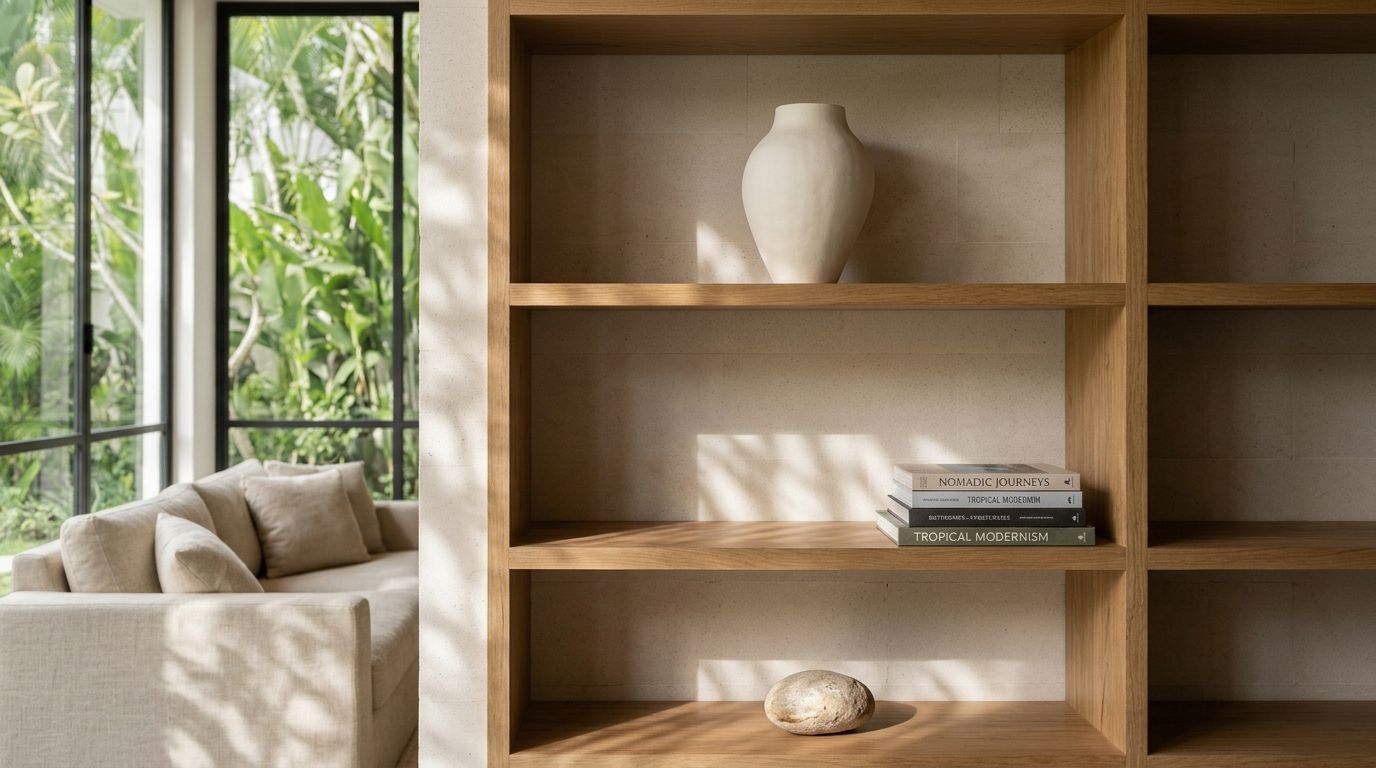
Before considering your bookshelf finished, take a step back and look at it as a whole.
Ask yourself:
- Does the eye move naturally across all the shelves?
- Are there enough differences in height, shape and texture?
- Do some objects compete for attention?
- Is there enough empty space?
- Does the composition connect with the surrounding interior?
- Is everything practical and easy to maintain?
And here is one final piece of advice:
When in doubt, remove one more object.
The most successful bookshelf arrangements rarely look as though someone has spent hours trying to decorate them. They look natural, balanced and effortless.
That is the beauty of thoughtful styling.
A Little Less Clutter, A Lot More Character
A beautifully styled bookcase isn’t about displaying everything you own. It’s about choosing the right pieces and giving each one the space to be appreciated.
In tropical hospitality interiors, where natural light, organic textures and a connection with the outdoors play such an important role, restraint can make all the difference.
At Kaotika Staging, we believe that the smallest styling decisions can transform the way a space feels.
Because sometimes, the most beautiful thing you can add to a shelf is simply a little more space.
Kaotika Staging – Creating spaces that feel as beautiful as they look.