
The beauty of a space often lies in the contrast between what has lived and what is yet to come.
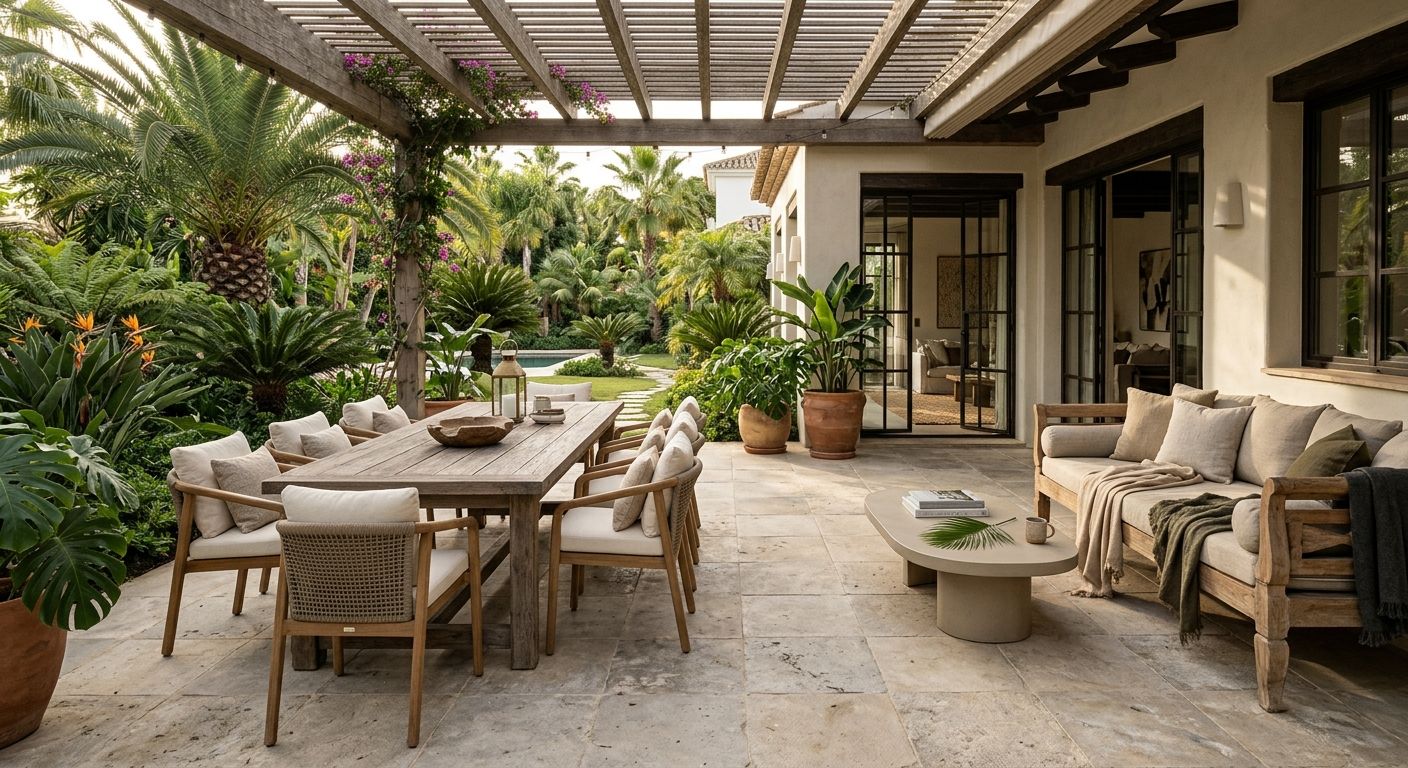
There is something captivating about walking into a tropical villa and finding a beautifully weathered wooden console beneath a contemporary piece of art, a sculptural modern sofa paired with an antique side table, or a traditional rattan chair sitting effortlessly alongside minimalist lighting.
Nothing feels overly designed. Nothing looks as if it came straight out of a catalogue. Instead, every piece seems to have its own story.
This is the art of mixing old and new: creating interiors that feel layered, authentic and effortlessly sophisticated.
For hotels, resorts, holiday apartments and private villas in tropical destinations, this approach offers something particularly valuable. It creates spaces with character, a sense of place and a distinctive visual identity — qualities that today’s travellers increasingly look for when choosing where to stay.
At Kaotika Staging, we believe that great interiors are not about following a single style. They are about knowing how to bring different periods, textures and personalities together to create something unexpected.
And in tropical environments, where architecture, natural light and outdoor living play such an important role, the possibilities are endless.
1. Let contrast tell the story
The secret to combining antique and contemporary furniture is not to make everything match. It is to create a conversation between different elements.
Think of a contemporary tropical living room with clean architectural lines, natural stone floors and large windows opening onto lush gardens.
Now introduce a vintage teak coffee table, an antique wooden bench or a beautifully aged decorative object.
Suddenly, the room feels warmer. More personal. Less predictable.
The practical formula:
- Pair a contemporary sofa with a vintage solid-wood coffee table.
- Place an antique console against a clean, minimalist wall.
- Combine modern dining chairs with a rustic or reclaimed timber dining table.
- Use contemporary artwork above a traditional wooden sideboard.
The contrast should feel intentional, not accidental.
Kaotika tip: Choose one or two distinctive vintage pieces and allow them to stand out. If every object competes for attention, the room loses its visual rhythm.
2. Tropical materials: where old and new meet naturally
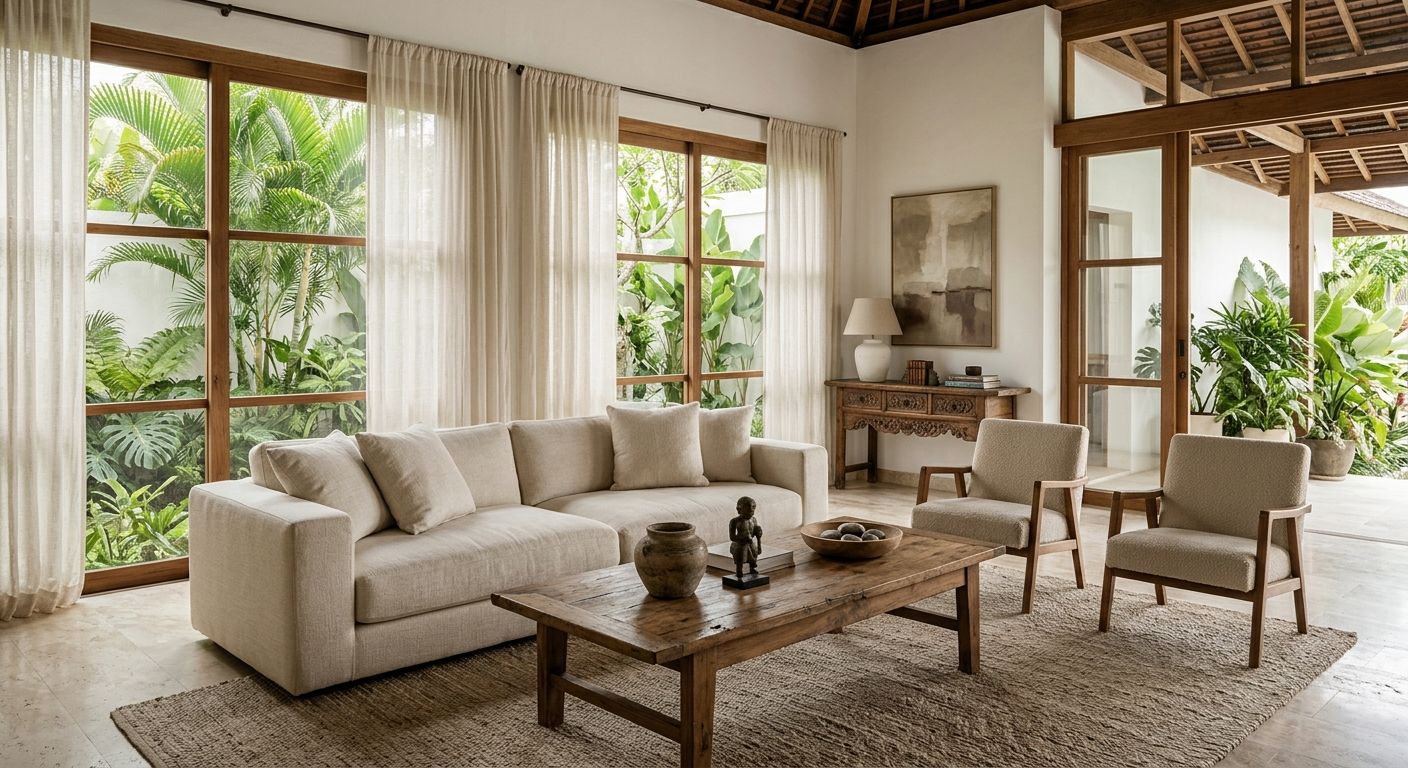
Tropical interiors have a natural advantage when it comes to mixing styles. Materials such as teak, bamboo, rattan, linen, jute and stone already carry a timeless quality.
They connect contemporary design with traditional craftsmanship.
Imagine a boutique hotel suite featuring:
- A sleek, low-profile bed with crisp white linen.
- Vintage rattan bedside tables.
- A contemporary pendant light in natural fibre.
- An antique wooden mirror.
- Soft linen curtains moving gently with the tropical breeze.
The result is relaxed but sophisticated. Natural but carefully curated.
The key is to combine textures rather than introduce too many competing colours.
Materials that work particularly well:
- Teak and reclaimed wood: Bring warmth, history and a connection to nature.
- Rattan and woven fibres: Add lightness and a relaxed tropical character.
- Linen and cotton: Soften contemporary furniture and create a sense of understated luxury.
- Stone and terrazzo: Introduce texture and architectural permanence.
- Aged brass and patinated metals: Add subtle elegance and a sense of history.
For hospitality projects in humid tropical climates, material selection must also be practical. Natural fibres, antique finishes and wooden furniture should be properly treated and maintained. Vintage upholstery may need replacing, and delicate materials should be kept away from excessive humidity and direct exposure to rain or intense sunlight.
Beautiful design should always work in real life.
3. The art of balancing proportions and silhouettes
One of the most common mistakes when mixing furniture from different periods is overlooking scale and proportion.
An antique cabinet can be visually imposing. A contemporary sofa may have a much lighter silhouette. Together, they can create a beautiful contrast — provided they are balanced.
Consider a spacious resort lounge:
A large, contemporary modular sofa anchors the room. Instead of surrounding it with equally bulky furniture, introduce a delicate vintage occasional table, a pair of sculptural wooden chairs and a minimalist floor lamp.
The contrast between substantial and lightweight forms creates movement.
Try this combination:
- One substantial contemporary piece.
- One distinctive antique or vintage piece.
- Two or three smaller accessories that connect their materials or colours.
Remember: a successful interior needs visual breathing space.
Not every corner needs furniture. Not every surface needs decoration.
In tropical hospitality, openness is part of the luxury.
4. Colour: create harmony without making everything identical
A common misconception is that antique and contemporary furniture need to share the same colour palette to work together.
They don’t.
What they need is a visual connection.
For tropical hotels and villas, a palette inspired by the surrounding landscape is a particularly effective starting point.
Think warm sand, ivory, natural wood, muted terracotta, olive green, deep tobacco and soft mineral tones.
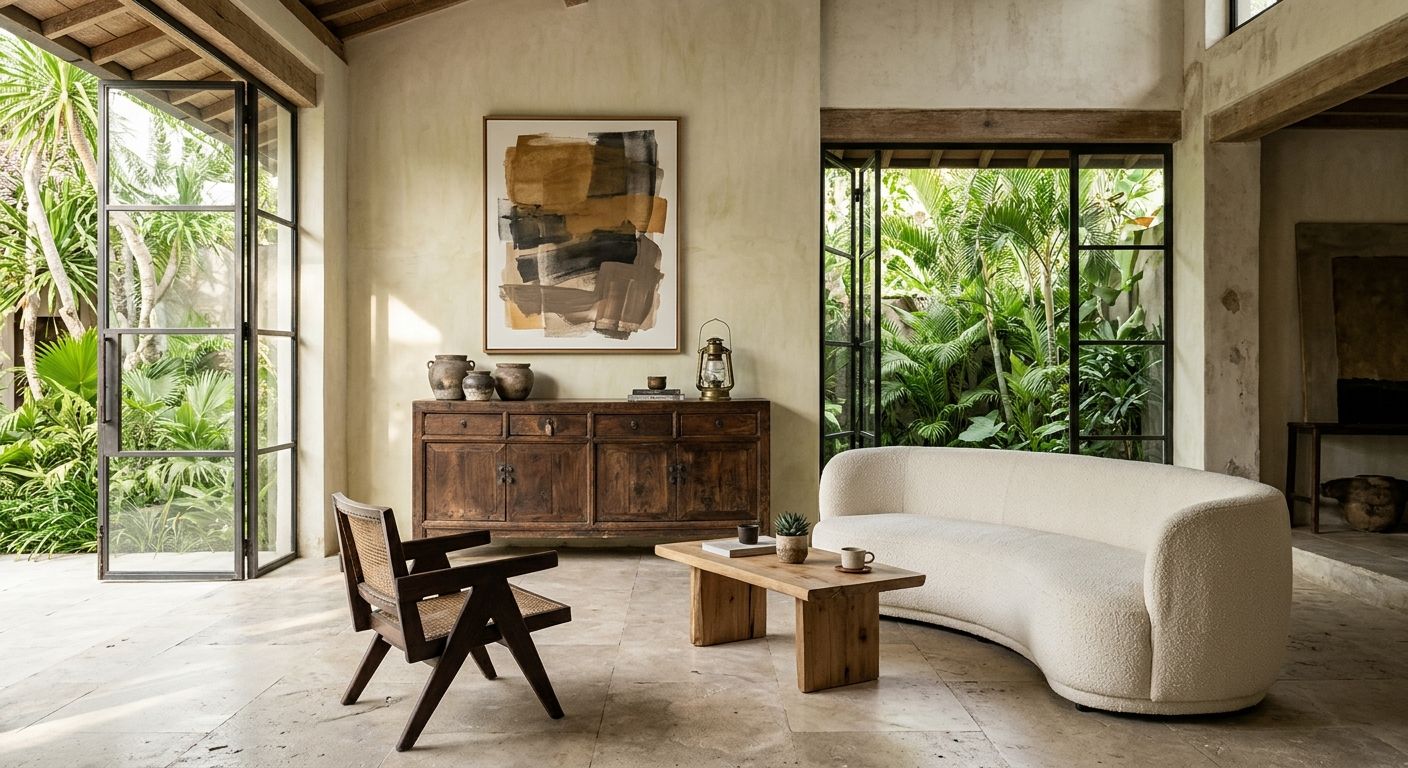
Now imagine a contemporary cream sofa, an antique dark-wood cabinet and a pair of vintage armchairs upholstered in muted sage green.
Different periods. Different personalities. One coherent atmosphere.
A practical colour strategy:
- Start with a neutral architectural base.
- Introduce one or two earthy accent colours.
- Repeat selected tones across textiles, artwork and decorative objects.
- Allow darker antique pieces to provide depth and contrast.
You don’t need to match everything. You need to create visual continuity.
5. Five common styling mistakes — and how to fix them
Mixing old and new is an art, but it is also a matter of editing. Sometimes the difference between a sophisticated interior and a confusing one comes down to a few small decisions.
MISTAKE 01 — Turning the room into an antique shop
Too many vintage objects, different wood finishes and decorative details can make a space feel cluttered.
The solution: Edit ruthlessly. Choose a few pieces with genuine character and give them room to breathe. Let one beautiful antique cabinet or sculptural chair become the focal point.
MISTAKE 02 — Making everything look brand new
A room filled exclusively with contemporary furniture can feel generic, particularly in a destination where travellers expect an authentic sense of place.
The solution: Introduce a vintage piece with texture and history. A reclaimed wooden bench, an old mirror or a traditional handcrafted object can immediately add personality.
MISTAKE 03 — Mixing styles without a connecting element
A rustic farmhouse table, a glamorous velvet armchair and an ultra-minimalist metal lamp may all be beautiful individually, but together they can feel disconnected.
The solution: Find a common thread. It could be a shared colour, a natural material, a similar silhouette or a consistent design language.
MISTAKE 04 — Ignoring the tropical climate
Delicate antiques, untreated wood and unsuitable upholstery can deteriorate quickly in humid environments.
The solution: Prioritise durable materials and finishes. Use properly treated timber, moisture-resistant construction, washable fabrics and outdoor-rated furniture where necessary. Keep valuable antiques in protected interior areas and consider restoration before installation.
MISTAKE 05 — Forgetting the guest experience
A beautiful room is not necessarily a functional one. Oversized furniture, fragile decorative objects and impractical layouts can interfere with the guest experience.
The solution: Think beyond the photograph. Ensure there is comfortable circulation, practical storage, accessible surfaces and furniture that can withstand frequent use.
A successful hospitality interior must look exceptional and perform exceptionally well.
6. Make the destination part of the design
Perhaps the most interesting aspect of combining old and new in tropical hospitality is the opportunity to tell a story about the location.
A villa in Bali, a boutique hotel in the Caribbean and a Mediterranean-inspired resort in Southeast Asia should not all look the same.
The architecture, local craftsmanship, landscape and cultural references should influence the selection of furniture and decorative objects.
Consider incorporating:
- Locally handcrafted wooden furniture.
- Vintage pieces sourced from regional antique markets.
- Traditional woven accessories.
- Contemporary artwork by local artists.
- Natural materials that reflect the surrounding environment.
The result should never feel like a themed interior or a collection of predictable tropical clichés.
Instead, it should feel connected to its surroundings in a subtle, sophisticated way.
Authenticity is not about filling a room with objects that represent a destination. It is about understanding its character and translating that into design.
7. Styling for photographs — and for unforgettable stays
For hotels, resorts and holiday rentals, interior styling has another important dimension: visual impact.
The spaces guests photograph, share and remember often influence how they perceive a property before they even arrive.
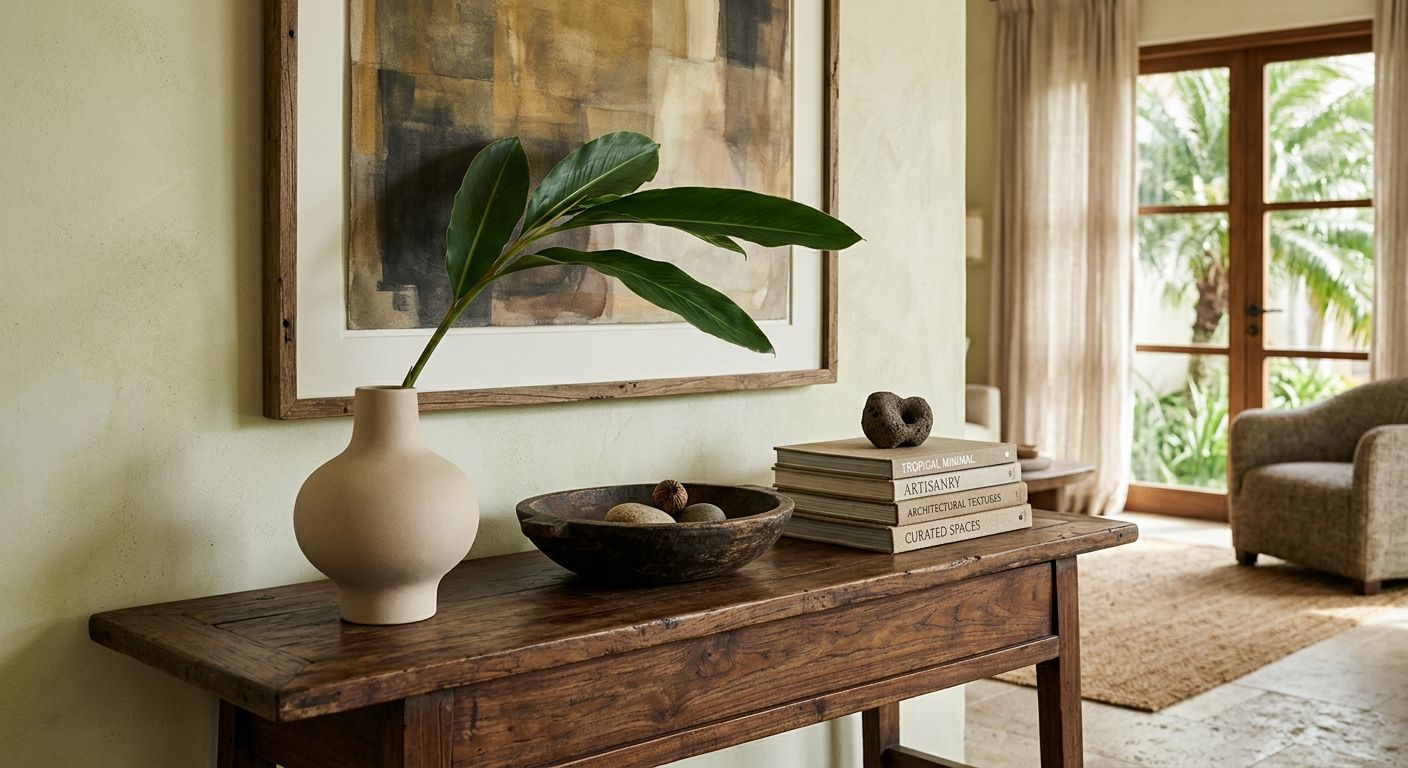
A carefully positioned antique armchair beside a contemporary floor lamp. A vintage console styled with fresh tropical foliage. A sculptural wooden table against a clean architectural backdrop.
These combinations create visual moments that feel distinctive and editorial.
But the styling should never exist exclusively for photography.
The most successful spaces are those where every detail contributes to both aesthetics and comfort.
For a memorable tropical suite, try this:
- Start with a contemporary architectural foundation.
- Introduce one statement vintage furniture piece.
- Layer natural textures through rugs, cushions and curtains.
- Add carefully selected artwork and handcrafted accessories.
- Finish with fresh greenery and warm, layered lighting.
Keep the composition relaxed. Avoid over-styling. Let natural light do its work.
The objective is to create an atmosphere that feels effortlessly beautiful, rather than meticulously staged.
The Kaotika Staging philosophy: Character over perfection
The most interesting interiors are rarely those where everything is new, perfectly coordinated or completely predictable.
They are the spaces where a contemporary design meets a piece with history. Where natural materials soften architectural lines. Where craftsmanship and modern comfort coexist.
For tropical hotels, resorts, apartments and villas, mixing old and new is more than a decorating technique. It is a way of creating a distinctive identity, enhancing the guest experience and adding emotional value to a property.
Because ultimately, luxury is not about having more things.
It is about choosing the right ones.
At Kaotika Staging, we believe that the magic happens in the mix — in the unexpected combinations, the thoughtful details and the pieces that make a space feel like nowhere else.
Less perfection. More personality. Always with intention.