
In tropical hospitality, the difference between a beautiful space and an unforgettable experience often lies in the details.
A stunning ocean view. Beautiful architecture. Natural light pouring through open windows. These are wonderful starting points, but they are not what necessarily makes a guest fall in love with a space.
What creates that feeling is how everything comes together.
The texture of a linen cushion, the way a tropical branch sits in a ceramic vase, the perfect balance between natural materials and carefully selected colours, or the simple elegance of a beautifully styled bedside table.
Styling is the art of making a space feel complete, effortless and desirable.
At Kaotika Staging, we believe that thoughtful styling has the power to transform not only the appearance of a property but also the way guests experience it. And in tropical destinations, where indoor and outdoor living naturally blend, every detail matters.
Let’s explore how to get it right.
1. Start with a feeling, not with accessories
Before adding cushions, artwork or decorative objects, ask yourself one question:
How do you want your guests to feel when they walk into the space?
Relaxed? Inspired? Connected to nature? Surrounded by understated luxury?
Your styling choices should tell a consistent story.
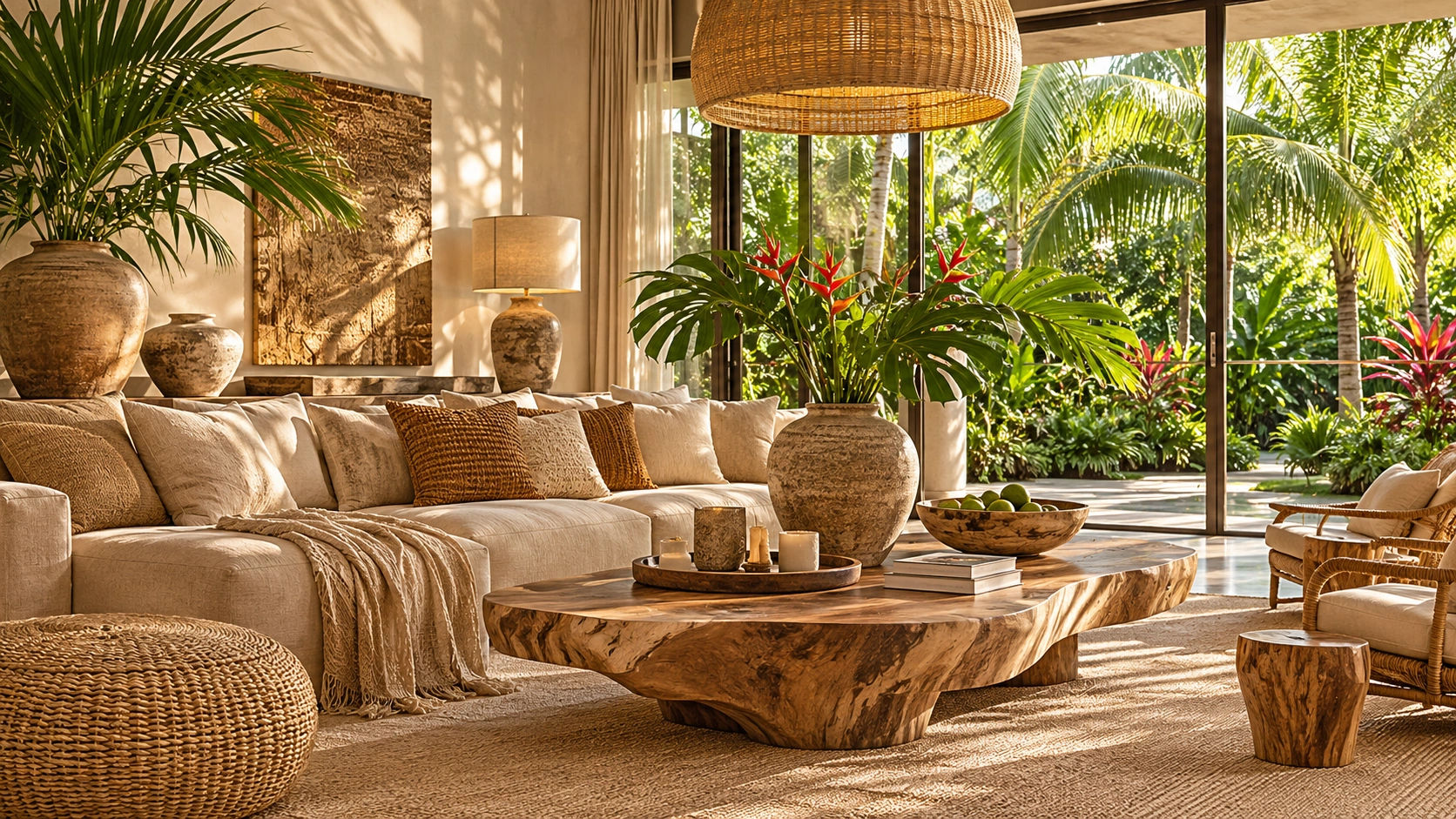
For a tropical villa, this might mean creating a relaxed Mediterranean-meets-tropical atmosphere, with natural wood, soft linen, organic shapes and subtle botanical accents.
For a boutique resort, the direction could be more sophisticated: earthy tones, sculptural furniture, handcrafted ceramics and carefully curated decorative elements.
The secret is consistency.
Practical example:
Imagine a beachfront apartment with white walls, wooden furniture and large windows.
Instead of filling it with colourful tropical prints, introduce:
- Sand-coloured linen cushions.
- A textured jute rug.
- A sculptural wooden bowl.
- One oversized piece of botanical artwork.
- A large ceramic vase with fresh tropical foliage.
The result? A calm, cohesive interior that feels connected to its surroundings without becoming predictable.
Common mistake: Mixing too many styles, colours and decorative themes.
How to fix it: Choose one clear design direction and repeat a limited palette of complementary colours and materials throughout the property.
2. Layer textures: the secret to creating depth
Tropical interiors should feel fresh and breathable, but that doesn’t mean they need to feel empty or minimal.
Texture is what brings warmth, personality and visual richness to a room.
Think of combining:
- Natural linen with woven rattan.
- Light oak with handmade ceramics.
- Cotton throws with textured cushions.
- Stone surfaces with soft upholstery.
- Bamboo details with organic fabrics.
These contrasts create visual interest without overwhelming the space.
<Example>
A bedroom that feels like a tropical retreat
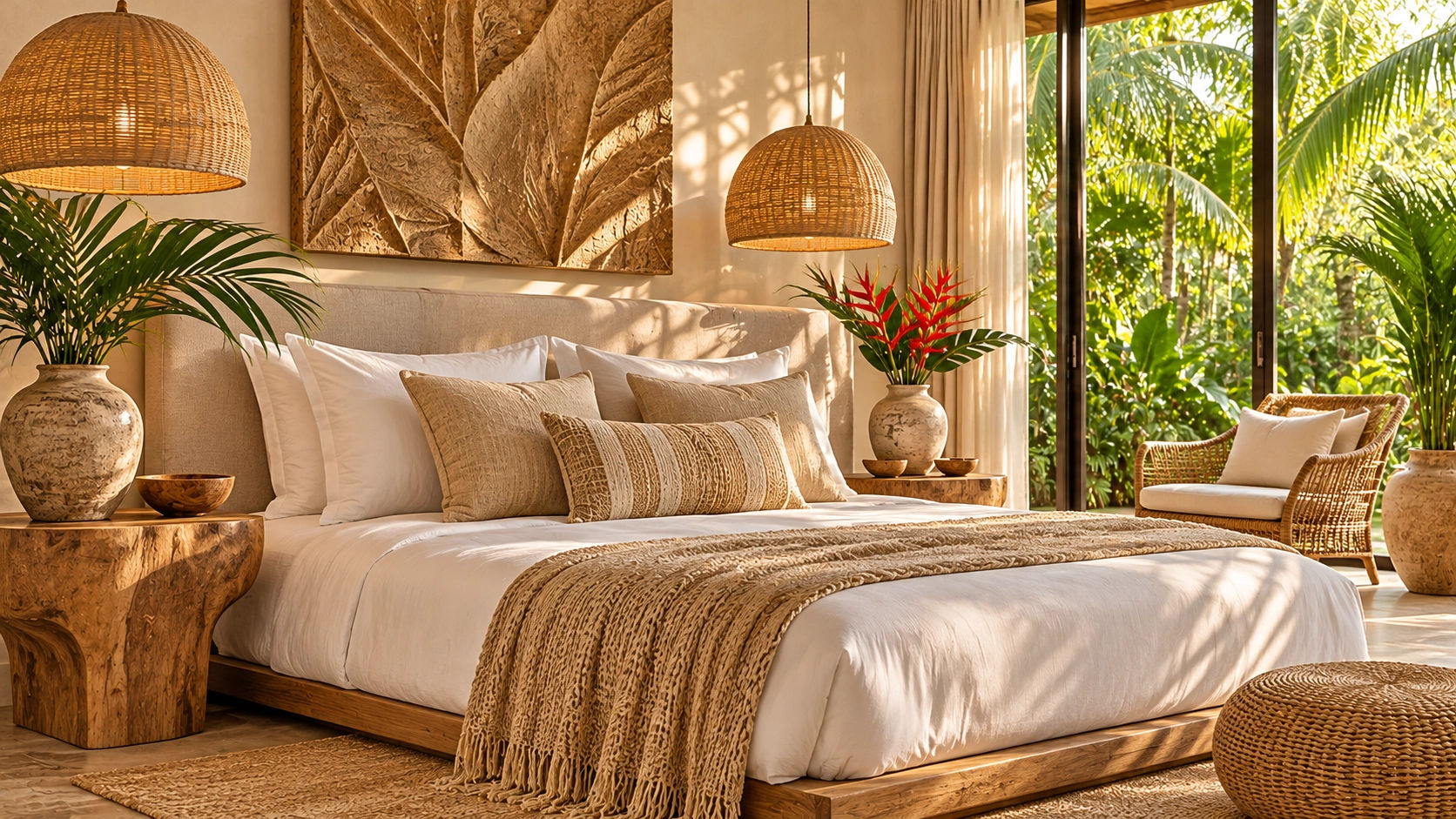
Start with crisp white bedding. Add two layers of natural linen cushions in warm neutral shades. Place a lightweight cotton throw at the foot of the bed. Introduce a woven pendant light and a small handcrafted ceramic object on the bedside table.
Nothing needs to be excessive. Each element contributes to the overall atmosphere.
</Example>
Common mistake: Using too many heavy fabrics, synthetic materials or dark decorative elements.
How to fix it: Prioritise breathable, lightweight and tactile materials that work with the tropical climate. Choose fabrics that look beautiful but are also practical, easy to maintain and suitable for frequent guest turnover.
3. Bring the outdoors in — but keep it intentional
In tropical hospitality, nature is one of your greatest design assets.
Lush greenery, natural light and organic forms can become part of the interior design itself.
But there is a difference between incorporating nature and simply filling a room with plants.
The objective is to create carefully composed botanical moments.
Styling ideas that work beautifully:
- A large palm leaf arrangement in an oversized ceramic vase.
- Tropical foliage on a reception console.
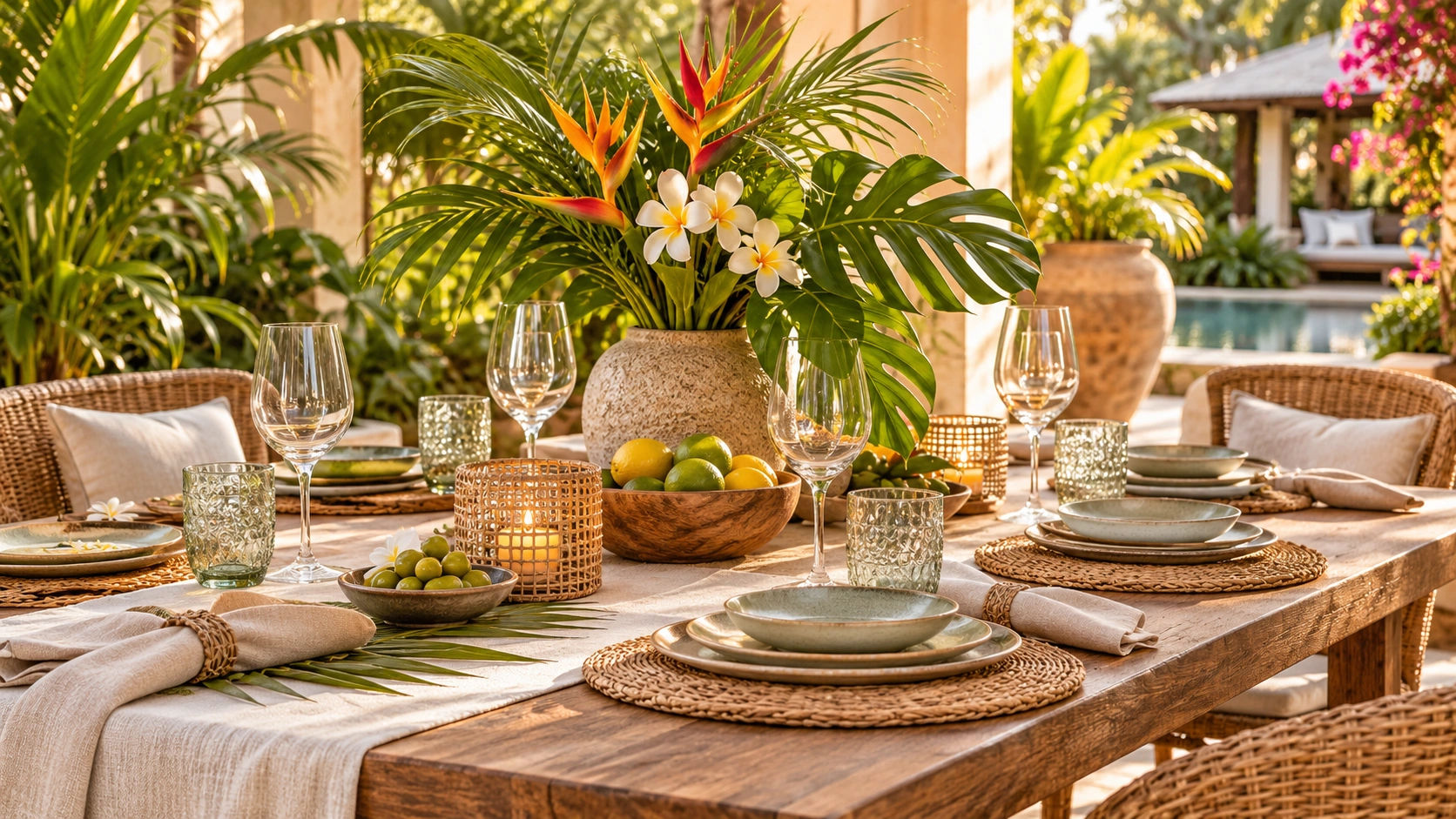
- A small cluster of greenery on an outdoor dining table.
- Natural branches as sculptural elements.
- Indoor plants positioned to frame architectural features or views.
<Example>
A resort entrance that makes an impression
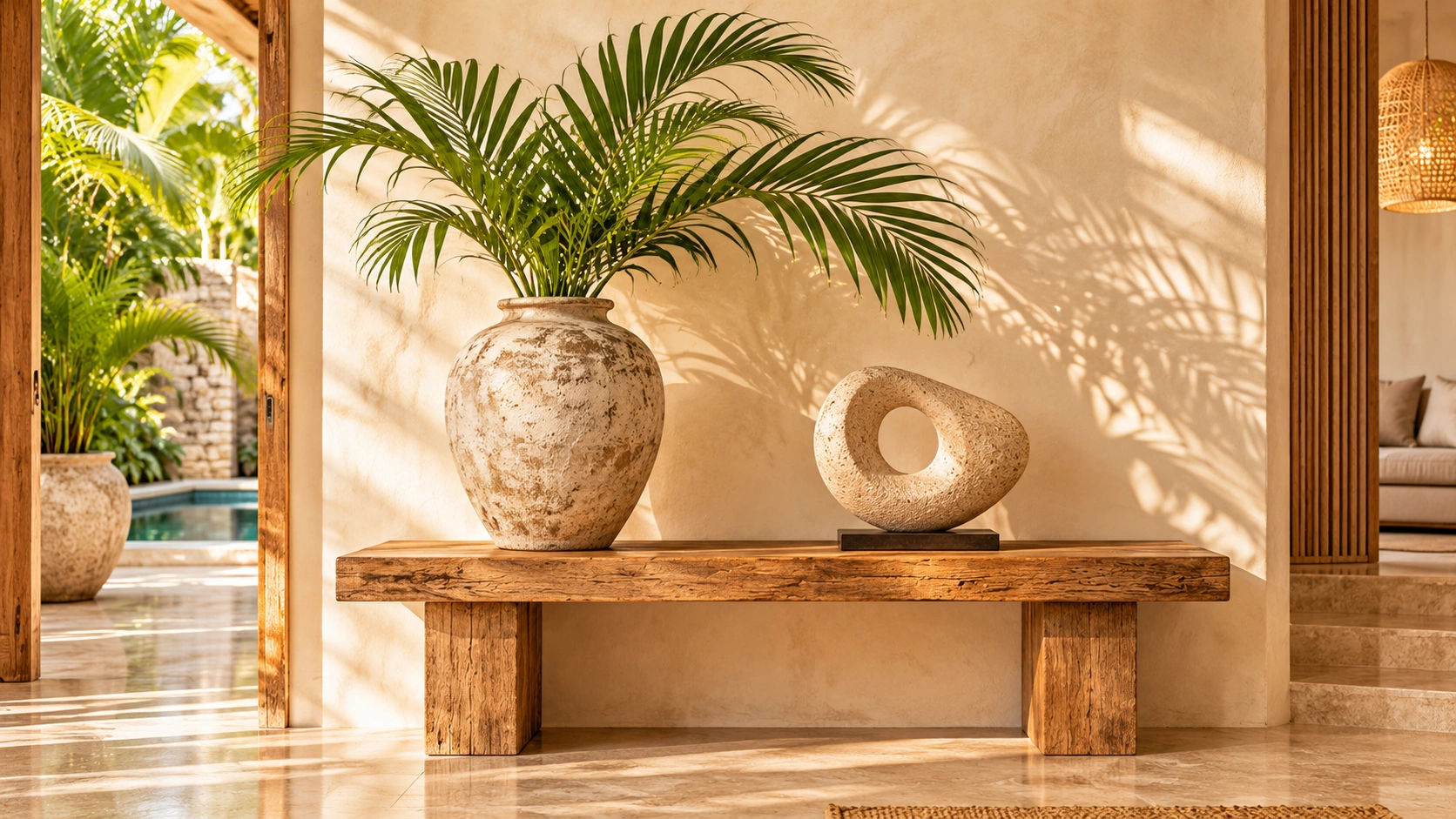
Instead of placing several small plants around the reception area, create one strong focal point: an oversized handmade planter with lush tropical foliage, positioned next to a natural stone console.
Add a subtle decorative object and warm ambient lighting.
The entrance instantly feels more curated, welcoming and memorable.
</Example>
Common mistake: Overusing tropical motifs, artificial flowers or too many different plant varieties.
How to fix it: Work with fewer, more impactful botanical arrangements. Select species suited to the local environment and consider maintenance, humidity and natural light. For interiors with limited daylight, choose appropriate low-maintenance greenery or high-quality botanical alternatives.
4. Master the art of the focal point
Every well-styled room needs a moment that catches the eye.
A focal point gives the space structure and helps guests understand where to look first.
It could be:
- A beautifully dressed bed.
- A statement pendant light.
- A sculptural coffee table.
- An oversized artwork.
- A carefully styled console.
- A spectacular outdoor dining setting.
The key is to avoid competing focal points.
Practical example: Styling a living room in a tropical villa
Imagine a spacious living room with an ocean view.
The view should remain the star.
Arrange the furniture to frame it, introduce a low coffee table with a few carefully selected objects, add two textured cushions to the sofa and place a statement ceramic vase on a side table.
Keep the visual weight low and the accessories restrained.
The room should enhance the view, never compete with it.
Common mistake: Decorating every surface and filling every empty corner.
How to fix it: Edit, simplify and create visual breathing space. Sometimes removing three objects makes a room look considerably more luxurious than adding three new ones.
5. Style the small moments guests actually notice
Some of the most memorable details in hospitality are found in unexpected places.
Think beyond the main living areas.
A well-styled bedside table, a welcoming bathroom counter or an inviting outdoor breakfast setting can elevate the entire guest experience.
Here are some simple ideas:
The bedroom
- A neatly folded throw at the end of the bed.
- A small ceramic tray for personal belongings.
- A bedside lamp with warm lighting.
- A book or magazine that reflects the destination.
The bathroom
- Coordinated dispensers.
- Fresh, neatly folded towels.
- A small natural arrangement.
- A wooden or stone tray for guest amenities.
The kitchen
- A beautiful wooden chopping board.
- A ceramic fruit bowl with seasonal produce.
- Coordinated kitchen textiles.
- A carefully arranged coffee station.
The terrace
- Neutral outdoor cushions.
- A textured table runner.
- A simple centrepiece.
- Lanterns or warm outdoor lighting.
These details may seem small, but together they communicate care, quality and attention.
Common mistake: Treating secondary spaces as purely functional.
How to fix it: Give every area at least one intentional styling detail. Guests experience the entire property, not just the rooms featured in the photographs.
6. Don’t forget the tropical climate: beauty must be practical
Styling a property in a tropical destination requires a different approach.
High humidity, intense sunlight, salt air, rain and frequent indoor-outdoor transitions all influence the materials and decorative elements you choose.
A beautiful space must also be able to withstand its environment.
What works best?
| Styling element | Smart tropical choice |
|---|---|
| Textiles | Breathable, washable linen-look fabrics and outdoor-rated upholstery |
| Rugs | Flat-weave, washable or quick-drying materials |
| Decorative objects | Ceramic, stone, treated wood and natural-look finishes |
| Furniture | Weather-resistant materials suitable for the intended location |
| Lighting | Warm LED lighting with appropriate outdoor protection |
| Plants | Species adapted to local light, temperature and humidity |
Common mistake: Using delicate materials, untreated natural fibres or indoor furniture in exposed outdoor areas.
How to fix it: Select materials according to their location and exposure. Use UV-resistant fabrics outdoors, protect vulnerable finishes from salt air and humidity, and choose easy-care accessories that can be maintained between guest stays.
Luxury should never come at the expense of functionality.
7. Outdoor styling: create the holiday feeling
In tropical destinations, outdoor spaces are not an extra. They are often one of the property’s biggest selling points.
A terrace, poolside lounge or garden dining area can become the emotional centre of the guest experience.
The trick is to style these spaces with the same attention as the interiors.
A few ideas to transform an outdoor area:
- Create a lounge corner with comfortable, weather-resistant seating.
- Use oversized planters to frame a pool or terrace.
- Introduce soft neutral cushions to balance the greenery.
- Style dining tables with natural textures and simple centrepieces.
- Add warm, layered lighting for evenings.
- Use outdoor rugs to define different functional areas.
<Example>
From an empty terrace to a private resort experience
Start with a comfortable outdoor sofa and two lounge chairs. Add cushions in sandy and earthy tones. Place a low coffee table in the centre with a ceramic tray and a small botanical arrangement.
Define the dining area separately with a natural-looking table setting and subtle lighting.
Suddenly, the terrace is no longer just an outdoor space. It becomes an invitation to slow down, enjoy the surroundings and stay a little longer.
</Example>
Common mistake: Leaving outdoor areas underdressed or treating them as an afterthought.
How to fix it: Create distinct zones for relaxing, dining and socialising. Use styling to give each area a purpose while maintaining a cohesive visual identity.
8. The final edit: less clutter, more intention
One of the most important skills in professional styling is knowing when to stop.
Once everything is in place, take a step back.
Look at the room from the entrance. Then from the main seating area. Finally, consider how it will appear in photographs.
Ask yourself:
- Is there a clear visual focal point?
- Do the colours and textures work together?
- Are there objects that feel unnecessary?
- Does the space feel balanced?
- Can guests move around comfortably?
- Does every decorative element serve a purpose?
Remember: styling is not about adding more. It is about making better choices.
A carefully selected vase can have more impact than ten decorative accessories. A beautifully dressed bed can transform the perception of an entire bedroom. And a thoughtfully styled terrace can make a property feel like a private tropical escape.
The Kaotika Staging Approach: Details Make the Difference
In hotels, resorts, holiday apartments and private villas, styling is much more than decoration.
It is a strategic tool that helps define a property’s identity, elevate its perceived value and create an emotional connection with potential guests.
In competitive tropical destinations, where travellers have endless accommodation options, the way a property looks and feels can make a real difference.
A well-styled interior photographs better, communicates quality more effectively and creates a more memorable first impression.
But above all, it makes people imagine themselves there.
At Kaotika Staging, we believe great styling is about creating spaces that feel as good as they look.
Spaces that tell a story. Spaces that embrace their surroundings. Spaces where every texture, colour and detail has a reason to be there.
Because sometimes, the most remarkable transformations don’t require a complete renovation.
They simply require seeing the space differently.
And that’s where the art of styling begins.