
1. Why White and Pastel Colors Are So Difficult to Capture
White and pastel tones are visually “high reflectance” colors. That means they reflect most of the light that hits them instead of absorbing it.
- White surfaces reflect nearly all wavelengths of visible light.
- Pastels reflect most light but with a slight tint due to minimal pigment absorption.
This creates a fundamental challenge in imaging systems: cameras must compress a very bright signal into a limited dynamic range. When they fail, highlights lose detail and become what is commonly called “blown out” or “clipped whites.”
In real life, your eyes adapt dynamically. Cameras do not.
2. What Is the “Blown-Out” Effect?
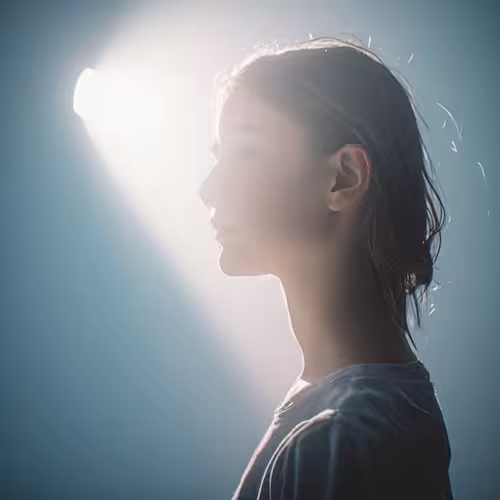
The blown-out effect occurs when a camera sensor receives more light than it can encode for a given pixel. Instead of recording detail, it hits a maximum threshold.
What happens technically:
- Sensor wells fill with electrons from incoming light.
- Once full, additional light cannot be recorded.
- Result: pure white pixels with no texture, detail, or gradient.
This is called clipping in highlights.
White and pastel fabrics are especially prone to this because they reflect light efficiently and evenly.
3. Natural Light vs Artificial Light
Lighting type is one of the biggest factors in whether whites and pastels look clean or blown out.
3.1 Natural Light
Natural light varies dramatically:
Soft daylight (cloudy skies)
- Diffused light source
- Lower contrast
- Whites and pastels appear smooth and controlled
- Minimal risk of clipping
Direct sunlight
- High intensity point source
- Sharp shadows and high contrast
- Whites easily blow out, especially on reflective fabrics
- Pastels can lose saturation and look washed out
Golden hour
- Warm spectrum
- Lower intensity
- Generally the most flattering for whites and pastels
- Adds warmth without excessive clipping
3.2 Artificial Light
Artificial lighting is more controllable but highly dependent on type.
LED lights
- Common in modern video and photography
- Can range from soft to harsh depending on diffusion
- Cheap LEDs often produce uneven spectral quality → whites can look harsh or slightly green/magenta shifted
Tungsten lights (halogen/incandescent)
- Warm color temperature (~3200K)
- Smooth spectral distribution
- Whites appear creamy rather than stark
- Less likely to produce harsh clipping, but can over-warm pastels
Fluorescent lights
- Often problematic
- Can produce flicker (especially in video)
- Uneven spectrum → whites may appear grayish or greenish
- Pastels can look dull or sickly
Strobe / flash lighting
- Extremely powerful and instantaneous
- Very high risk of clipping whites if not controlled
- Requires careful exposure control and diffusion
4. Direction of Light and Its Impact
Light direction changes everything about how whites and pastels behave.
4.1 Front lighting
- Even illumination
- Minimizes shadows
- Increases risk of flat, blown-out whites
- Pastels can lose dimensionality
4.2 Side lighting
- Adds texture and depth
- Reveals fabric structure
- Better for controlling highlights
- Whites look more dimensional and less “flat blown”
4.3 Backlighting
- Strongest risk of overexposure
- Creates glowing edges or full silhouette effects
- Whites can bloom dramatically (intentional or accidental)
- Pastels may become translucent or disappear
4.4 Top lighting
- Harsh shadows under eyes, folds, and fabric creases
- Common in stage lighting
- Can create uneven exposure on white clothing
5. Why Whites “Bloom” or Glow in Cameras
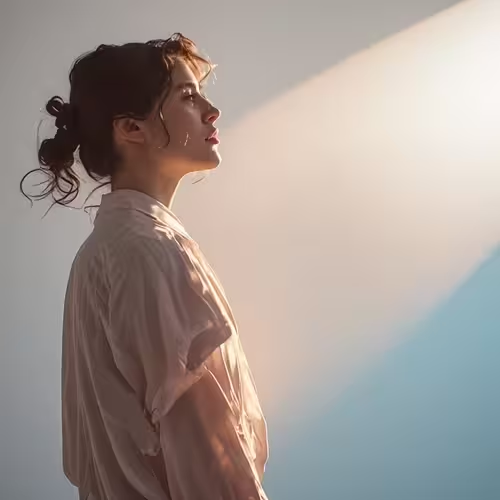
Even before full clipping, whites often appear to glow. This is due to:
- Sensor saturation near clipping point
- Lens flare or internal reflection
- Diffusion from soft focus or atmospheric haze
- Compression artifacts in digital video
Pastels can also bloom, but less aggressively because they reflect less total intensity.
6. Fabric Type: Why Material Matters More Than Color
White is not just white. Fabric structure changes everything.
6.1 Best-performing white fabrics (camera-friendly)
- Matte cotton
- Heavy linen
- Wool blends
- Structured polyester (non-shiny finish)
These:
- Absorb small amounts of light
- Maintain texture under brightness
- Resist highlight clipping visually
6.2 Worst-performing white fabrics
- Silk (especially satin silk)
- Satin polyester
- Sequined or metallic fabrics
- Thin synthetic blends with sheen
These:
- Reflect light specularly (mirror-like highlights)
- Create hot spots that clip instantly
- Produce inconsistent exposure across folds
7. Pastel Fabrics: Behavior in Light
Pastels behave differently than pure white because pigment absorption introduces subtle complexity.
Strong pastels (more saturated)
- Hold color under strong lighting
- Better for harsh sunlight or stage lighting
- Less likely to wash out completely
Soft pastels (very light tones)
- Extremely sensitive to overexposure
- Can turn nearly white under bright conditions
- Lose color identity quickly under flash or LED panels
8. Movement: How Fabric Motion Changes Exposure
Movement introduces temporal changes in light reflection.
Key effects:
8.1 Motion-induced highlights
- As fabric moves, angles to light change constantly
- Creates flickering bright spots on white fabric
- Common in dancing, runway walking, or wind
8.2 Temporal clipping in video
- One frame may be properly exposed
- Next frame may be fully blown out
- Especially visible with fast LED shutter mismatches
8.3 Airflow and translucency
- Lightweight pastel fabrics may become semi-transparent when moving against backlight
- White fabrics may appear to “pulse” in brightness
9. Stage Lighting vs Video/Film Lighting
These two environments treat whites and pastels very differently.
9.1 Stage lighting
- Designed for visibility from a distance
- High intensity
- Often mixed color temperatures
- Frequent use of top/front wash lighting
Effects:
- Whites often blow out intentionally for visibility
- Pastels can lose subtlety under strong washes
- Detail is less important than presence
9.2 Film and video lighting
- Designed for controlled exposure
- Emphasis on dynamic range
- Use of diffusion, flags, reflectors
Effects:
- Whites are carefully “held back” to preserve texture
- Pastels are shaped with fill light rather than intensity
- More nuanced control over highlight roll-off
10. Exposure Control: Why Cameras Struggle
Modern cameras have limited dynamic range compared to human vision.
Key limitations:
- Sensor saturation ceiling
- Limited highlight recovery
- Compression in JPEG/8-bit video
This is why whites and pastels often require deliberate exposure compensation:
- Underexposing slightly to preserve highlights
- Using highlight protection modes (log profiles in video)
- Shooting in RAW format
11. How to Prevent Blown-Out Whites and Pastels
11.1 Exposure techniques
- Use histogram monitoring
- Protect highlights, not shadows
- Slight underexposure (especially in daylight)
11.2 Lighting control
- Use diffusers (softboxes, scrims)
- Avoid direct midday sun
- Reduce specular reflections with flags or negative fill
11.3 Fabric selection
- Prefer matte materials for bright environments
- Avoid glossy synthetics under flash or stage lighting
11.4 Camera settings
- Lower ISO
- Faster shutter speed in bright environments
- Smaller aperture (higher f-number) for control
12. Interesting Phenomena: Why Whites “Look Better” in Certain Light
White clothing is often said to look “expensive” or “cheap” depending on lighting. This is not subjective—it’s physical:
- Controlled soft light reveals structure → premium look
- Harsh direct light flattens texture → cheap or blown-out appearance
- Slight warm light adds depth → aesthetic enhancement
Pastels behave similarly but are more sensitive to environmental contamination (color spill, reflections, etc.).
13. Final Insight: White Is Not a Color Problem—It’s a Light Problem
White and pastel tones don’t “fail” in cameras. They expose the limits of lighting control.
The real issue is not the fabric or color, but the interaction between:
- Light intensity
- Direction
- Surface reflectivity
- Camera dynamic range
- Motion and timing
Mastering whites and pastels is essentially mastering light behavior itself.
Practical Guide: Shooting Whites & Pastels Without Losing Detail
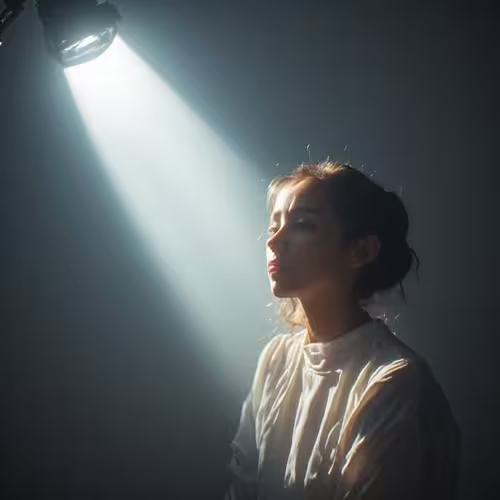
1. Quick Exposure Cheat Sheet (Photo + Video)
Core rule:
Expose for highlights, recover shadows later.
Recommended starting points:
- Bright daylight:
→ Exposure compensation: -0.3 to -1.0 EV - Studio lighting:
→ Keep highlights just under clipping on histogram - Video (log profiles):
→ Slightly underexpose (protect highlight roll-off)
Camera settings baseline:
Photo
- ISO: 100–400 (keep low)
- Aperture: f/4–f/8 (sharp + controlled light intake)
- Shutter: adjusted for exposure (avoid over-bright highlights)
Video
- Shutter rule: 1/(2×frame rate)
- 24fps → 1/50
- 30fps → 1/60
- Use ND filters in bright environments
- Prefer LOG or flat picture profiles
2. Studio Lighting Setup (Simple but Professional)
Setup A: Safe white/pastel portrait lighting
        Softbox
          (key)
           ↘
Subject → [MODEL]
           ↗
   Reflector (fill)
Key points:
- Large softbox = softer highlights
- Reflector reduces harsh contrast
- Distance light–subject controls intensity falloff
Setup B: High-control fashion lighting
   Flag        Softbox
    |            ↘
    |         [MODEL]
    |            ↗
   Fill light (low power)
Key points:
- Flags prevent highlight spill
- Fill light prevents texture loss in whites
- Prevents “glowing white fabric” effect
3. Natural Light Setup (Outdoor Control)
Best scenario: open shade
- Subject under building shade
- Sky acts as giant softbox
- Whites stay detailed, pastels stay rich
Avoid:
- Direct midday sun
- Reflective surfaces (pavement, sand, water glare)
Golden hour advantage:
- Naturally compresses dynamic range
- Softens white clipping
- Enhances pastel warmth
4. Fabric Behavior Guide (What to Choose When)
Best for camera (safe in any lighting):
- Heavy cotton (white shirts, structured dresses)
- Linen (natural texture prevents flat highlights)
- Wool blends (excellent light absorption control)
Best for controlled environments:
- Matte polyester (costume/fashion shoots)
- Brushed cotton blends
Risky fabrics (use only with controlled lighting):
- Silk satin → creates highlight “hot streaks”
- Gloss polyester → unpredictable reflection spikes
- Thin chiffon → transparency + exposure instability
- Sequins / metallic threads → instant clipping hotspots
5. Color Strategy for Wardrobe
Pure white:
- Use when lighting is soft or diffused
- Avoid under direct sun or harsh LEDs
Off-white / cream:
- Much safer in real-world conditions
- Reduces clipping risk by ~30–50%
Pastels:
- Best in controlled light or shade
- Soft pink, mint, and baby blue are most sensitive to overexposure
- Slightly deeper pastels hold up better under harsh lighting
6. Lighting Type Survival Guide
LEDs (common in modern sets)
- Problem: spectral spikes + uneven highlights
- Fix: diffusion + lowering intensity
Tungsten lights
- Warm, forgiving
- Great for whites (they look creamy instead of blown)
- Can shift pastels too warm
Flash/strobes
- Highest clipping risk
- Always:
- Use softboxes
- Lower power first, raise gradually
Fluorescent lighting
- Avoid if possible for fashion work
- Causes flat, dull whites + green tint contamination
7. Movement Control (Very Important in Real Shoots)
What happens:
- Moving fabric changes angle → changing brightness per frame
- White fabric can “flash” unpredictably
Solutions:
- Use slightly heavier fabrics for motion shots
- Increase diffusion on key light
- Reduce backlight intensity
For video:
- Avoid extreme backlighting unless intentional glow effect is desired
- Lock exposure manually (don’t use auto ISO)
8. Direction of Light (Practical Rules)
Front light:
- Safe but flat
- Use for ID photos, controlled beauty shots
Side light:
- Best balance of detail + control
- Ideal for whites and pastels
Backlight:
- Use carefully
- Add fill light or reflector to prevent silhouette clipping
Top light:
- Worst for white clothing unless heavily diffused
9. Fast Problem Diagnosis (On Set)
If whites look “burned”:
- Lower light intensity OR
- Increase distance OR
- Add diffusion OR
- Stop down aperture (higher f-number)
If pastels look gray or dull:
- Add gentle fill light
- Check white balance
- Avoid fluorescent contamination
If fabric looks “glowing” unnaturally:
- You are hitting highlight roll-off
- Add flag or reduce specular reflections
10. Professional Trick: The “Gray Check”
Always test exposure with:
- Neutral gray card OR
- Folded matte white cloth
If that object clips → your scene will definitely clip with real wardrobe whites.
11. Final Field Principle
If you remember only one thing:
Whites fail because light is uncontrolled—not because the camera is bad.
Control the light first. Camera settings come second.