
Choosing rugs for tropical climates requires more than finding a colour that works with the furniture. High humidity, warm temperatures, strong sunlight and frequent indoor-outdoor movement can all affect how a rug performs and how long it lasts.
The best rugs for tropical interiors are usually easy to maintain, appropriate for the room’s moisture levels, comfortable underfoot and visually suited to the architecture. Flatweaves, lightweight cotton rugs and suitable indoor-outdoor designs are useful options, while natural fibres such as jute, sisal and seagrass require more careful placement in humid environments.
But practicality is only half the story. A rug also influences how a tropical room feels, how furniture relates to the floor and how colour and texture interact with natural light.
The right choice balances material performance with visual identity.
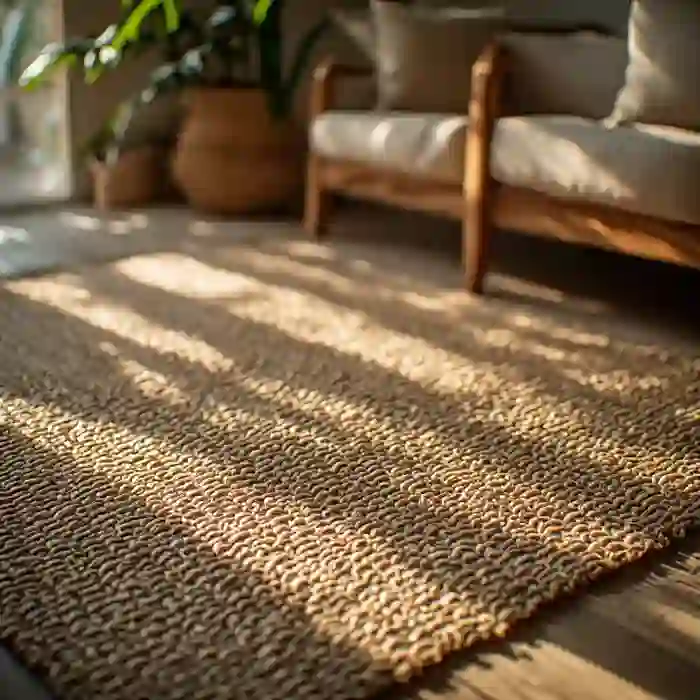
What Is the Best Rug for a Tropical Climate?
The best rug for a tropical climate depends on humidity, ventilation, location and intended use. For many tropical homes, a lightweight flatweave or a low-pile rug made from an easy-care material is a practical starting point.
Here is a quick guide to the main options:
| Rug material or construction | Best use | Main consideration |
|---|---|---|
| Cotton | Bedrooms and informal living areas | Check washing and drying requirements |
| Jute | Dry living rooms and covered spaces | Vulnerable to prolonged moisture |
| Sisal | Dry, high-use interior areas, depending on construction | Can be difficult to clean and sensitive to moisture |
| Seagrass | Dry interiors with natural materials | Check the manufacturer’s moisture guidance |
| Wool | Air-conditioned interiors and selected hospitality spaces | Choose pile and density according to use |
| Synthetic indoor-outdoor fibres | Covered terraces, busy living areas and suitable hospitality settings | Check UV, moisture and cleaning specifications |
| Flatweave construction | Dining areas, living rooms and circulation zones | Performance depends on the fibre and backing |
These categories are not interchangeable. A flatweave describes how a rug is constructed, not what it is made from. A cotton flatweave and a synthetic indoor-outdoor rug therefore have different maintenance requirements.
For rooms that regularly become damp, choose a product specifically suited to those conditions rather than relying on appearance alone.
Which Rug Materials Are Best for Humid Climates?
For humid climates, prioritise materials and constructions that suit the actual moisture exposure and can be maintained and dried properly. Synthetic fibres designed for outdoor use may be suitable for demanding areas, while cotton and natural fibres can work well in drier, well-ventilated rooms.
No fibre is automatically mould-proof. Moisture retention depends on the rug’s construction, backing, the floor beneath it, ventilation and how quickly the rug dries.
Are Jute Rugs Suitable for Tropical Homes?
Jute rugs can work in tropical homes, but they are best placed in relatively dry interior areas with good ventilation.
Jute has a warm, organic texture that complements timber, stone, rattan and linen. Its understated appearance suits contemporary tropical, coastal and natural minimalist interiors.
However, prolonged dampness can damage natural fibres and contribute to unpleasant odours or mould-related problems. Jute is therefore a poor choice for regularly wet floors, exposed outdoor areas or persistently damp rooms.
Best for: dry living rooms, bedrooms and covered areas that remain protected from moisture.
Avoid when: the rug is likely to become wet frequently or cannot dry thoroughly.
Is Sisal a Good Choice for Tropical Interiors?
Sisal can be a good choice for dry tropical interiors where a structured, relatively firm surface is desirable.
Its defined woven texture works well beneath furniture and can introduce a restrained architectural quality. It is particularly effective when the interior already contains natural timber, stone or textured plaster.
The main limitations are moisture sensitivity and cleaning. Dirt can become embedded in some constructions, and liquid spills may be difficult to remove.
Best for: dry living areas, selected dining spaces and interiors where a natural, structured texture is important.
Are Cotton Rugs Practical in Hot Climates?
Cotton rugs are often practical in hot climates because many are relatively lightweight and available in washable designs.
They work well in bedrooms, reading corners and informal living spaces where softness underfoot matters more than deep cushioning. Washable cotton rugs can also be useful in homes where dust and outdoor particles regularly enter through open windows.
However, a washable rug is only practical if it can dry completely. In humid conditions, a damp rug left on the floor can develop unpleasant odours.
Best for: bedrooms, casual living spaces and smaller areas where regular washing is manageable.
Can You Use Wool Rugs in Tropical Climates?
Yes. Wool rugs can work in tropical climates, particularly in air-conditioned interiors and spaces where softness and acoustic comfort are priorities.
The choice depends on the rug’s pile, density, backing and maintenance requirements. A lightweight, low-pile wool rug can feel very different from a thick, deep-pile design.
In a warm, naturally ventilated room, a heavy wool rug may feel visually dense and retain more warmth than desired. In an air-conditioned hotel lounge or bedroom, the same material may provide a welcome sense of comfort.
Best for: air-conditioned bedrooms, lounges and selected hospitality interiors with suitable maintenance conditions.
Are Synthetic Rugs Better for Tropical Climates?
Synthetic rugs can be a practical option in tropical environments, particularly when they are specifically designed for indoor-outdoor use.
Depending on the fibre and construction, they may offer easier cleaning, good colour retention and greater suitability for areas exposed to splashes or frequent traffic.
However, synthetic does not automatically mean waterproof, mould-resistant or UV-proof. Specifications vary considerably between products.
Before buying, check the manufacturer’s guidance on water exposure, drying, sunlight, cleaning products and outdoor suitability.
Best for: covered terraces, busy family spaces and hospitality areas where easy maintenance is essential.
Are Flatweave Rugs Better Than High-Pile Rugs in Tropical Climates?
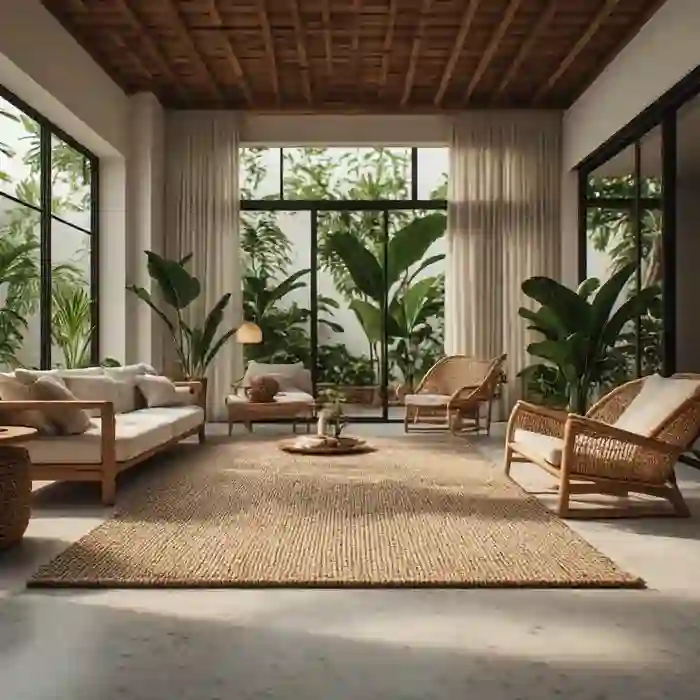
Flatweave rugs are often a practical choice for tropical interiors because they have a low profile, create less visual bulk and work well beneath furniture.
Their construction can also make vacuuming and everyday cleaning easier than with some deep-pile rugs. However, actual performance depends on fibre, backing and weave density.
Flatweaves are particularly useful in:
- Open-plan living rooms.
- Dining areas where chairs need to move easily.
- Apartments with limited floor space.
- Covered indoor-outdoor living areas.
- Contemporary tropical interiors with hard flooring.
High-pile rugs are not automatically unsuitable. They can provide softness and acoustic benefits in bedrooms or air-conditioned spaces. The important question is whether their comfort and maintenance requirements suit the climate and intended use.
For many tropical interiors, a low-profile rug provides enough texture without overwhelming the floor.
What Rug Patterns Work Best in Tropical Interiors?
The best rug patterns for tropical interiors depend on the design style and the role the rug plays in the room. Geometric patterns create structure, botanical designs connect the interior with nature, and subtle woven textures provide visual depth without competing with furniture.
Are Botanical Rugs a Good Choice for Tropical Design?
Botanical rugs can work beautifully in tropical interiors, especially when the motifs are simplified or abstract.
Instead of relying on literal palm leaves and oversized flowers, consider organic shapes, stylised foliage and patterns inspired by the movement of plants.
A restrained botanical rug can complement tropical vegetation outside without making the room feel themed.
In a hotel guest room, muted botanical forms may create a subtle sense of place. In a resort lounge, a larger, more expressive pattern can become a focal point.
The key is to consider scale, contrast and the amount of pattern already present in the space.
Do Geometric Rugs Work in Tropical Homes?
Yes. Geometric rugs can provide a useful contrast to the irregular textures of tropical architecture.
Grids, stripes, diamonds, arches and stepped patterns introduce order alongside timber grain, woven furniture, natural stone and vegetation.
They are particularly effective in contemporary tropical and tropical minimalist interiors, where the aim is to combine natural materials with clean architectural lines.
A geometric rug can also help define a seating area in an open-plan room without using partitions.
Are Striped Rugs Suitable for Small Tropical Apartments?
Striped rugs can work well in small tropical apartments because their directional pattern helps organise the visual space.
Longitudinal stripes can emphasise the length of a narrow room, while horizontal stripes can draw attention across its width. The effect depends on the orientation of the rug, the furniture arrangement and the room’s proportions.
Choose lower-contrast stripes if the room already contains strong architectural lines or patterned textiles.
In a compact apartment, the rug should help clarify the layout rather than introduce another competing visual element.
What Colours Are Best for Rugs in Tropical Interiors?
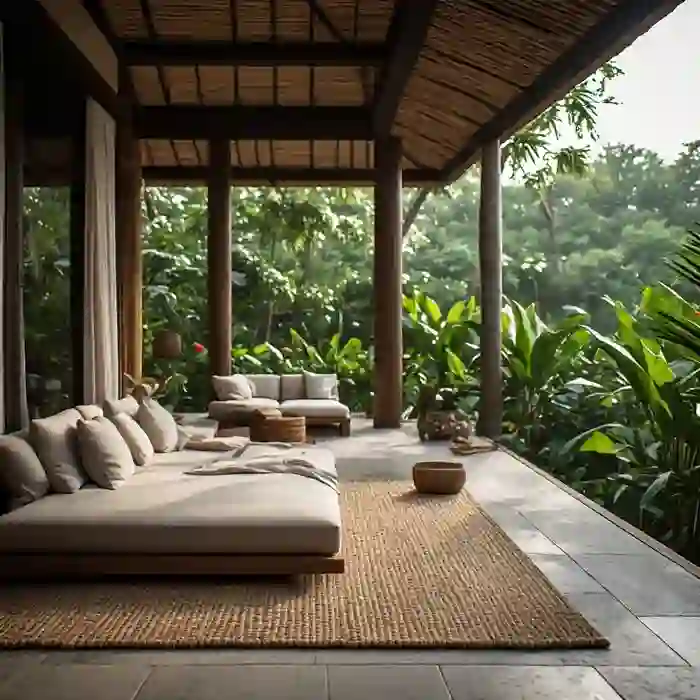
The best rug colours for tropical interiors depend on natural light, flooring, furniture and the atmosphere you want to create.
Natural neutrals provide a calm foundation, botanical greens connect the interior with vegetation, terracotta adds warmth, and mineral blues introduce a cooler visual note.
Natural Neutrals: Sand, Beige and Stone
Sand, beige, warm white and stone tones work well with timber, limestone, terrazzo, linen and natural woven materials.
They are especially useful in contemporary tropical interiors where texture matters more than strong colour.
However, very pale rugs can show dirt and marks easily, particularly near entrances or in busy hospitality areas.
Green Rugs for a Tropical Atmosphere
Olive, moss, eucalyptus and deeper botanical greens can reinforce the relationship between an interior and its surroundings.
Green does not need to appear in a leaf pattern. A solid or subtly textured green rug can create a sophisticated connection with tropical planting.
Combine green with timber, warm ivory, stone and restrained metallic accents for a balanced result.
Terracotta and Earth-Tone Rugs
Terracotta, clay, rust and ochre introduce warmth and visual depth.
These colours can work particularly well with warm timber, textured plaster, natural ceramics and interiors inspired by Southeast Asian materials and landscapes.
Use stronger terracotta tones as a focal point, or choose muted clay shades when the room already has a rich material palette.
Blue Rugs for Tropical Interiors
Mineral blue, deep indigo and muted blue-green tones can evoke water and sky without relying on obvious coastal motifs.
They work particularly well with pale stone, natural timber and warm neutral textiles.
The final appearance depends on daylight. Always assess samples in the actual room rather than relying exclusively on showroom lighting or online product photographs.
Which Rugs Work Best with Different Tropical Interior Styles?
A successful rug should reinforce the room’s visual identity rather than simply repeat a tropical theme.
Contemporary Tropical Style
Choose a low-pile rug with a restrained geometric pattern, subtle botanical design or natural texture. Pair it with timber, linen, stone and contemporary furniture.
Tropical Minimalism
Choose a tonal flatweave or a natural-looking rug with understated texture. Avoid unnecessary patterns if the architecture and materials already provide visual interest.
Coastal Tropical Style
Consider stripes, faded mineral colours and lightweight woven constructions. A coastal interior does not need literal shells, anchors or marine motifs to suggest its relationship with the sea.
Tropical Bohemian Style
More expressive patterns, layered textiles and earthy colours can work well in tropical bohemian interiors. Keep the combination intentional by balancing patterned surfaces with quieter materials.
Modern Resort Style
Choose rugs that combine visual sophistication with practical performance. Large-scale geometry, restrained botanical motifs and carefully selected neutrals can establish a sense of place without making the interior look themed.
How Do You Choose Rugs for Tropical Hotels and Resorts?
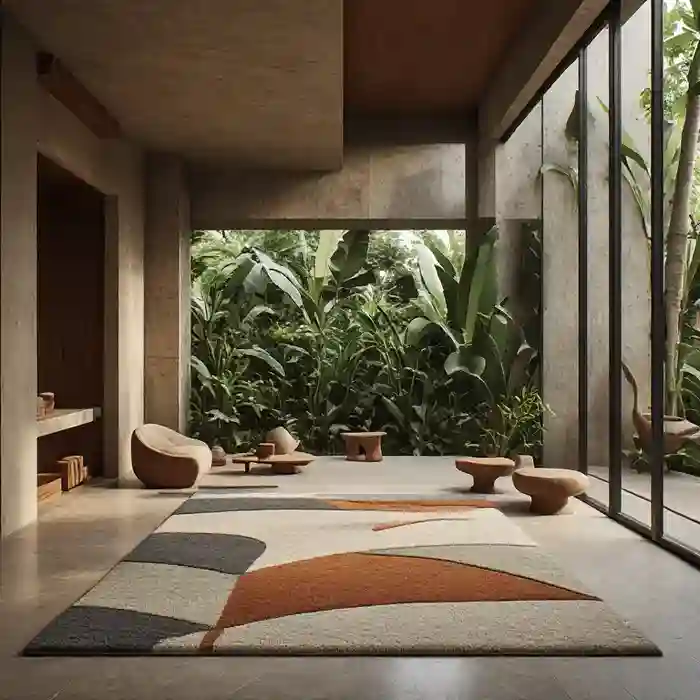
For tropical hotels and resorts, the best rug is one that combines the required visual effect with durability, cleanability and suitability for its location.
A rug in a quiet guest suite has different demands from one in a busy reception area or beside a pool.
Before specifying a rug, consider six factors:
1. Foot traffic. Choose a construction designed for the volume of people using the space.
2. Moisture exposure. Poolside areas, entrances and terraces require different specifications from dry guest rooms.
3. Cleaning requirements. Check whether the rug can withstand the hotel’s cleaning methods and schedule.
4. Colour and pattern. Consider how well the design disguises everyday dust, sand and marks without making the interior visually busy.
5. Acoustic performance. Rugs can help reduce reflected sound in spaces with hard floors, although the effect depends on the rug’s size and construction.
6. Safety and installation. Check slip resistance, backing compatibility, edge stability and accessibility requirements for the specific project.
For hospitality interiors, material selection is part of the guest experience. A beautiful rug that becomes difficult to maintain can quickly undermine the atmosphere it was intended to create.
How Do You Prevent Mould Under a Rug in a Humid Climate?
To reduce the risk of mould beneath a rug, keep both the rug and the floor dry, maintain appropriate ventilation and investigate any recurring dampness.
Practical measures include:
- Clean spills promptly and follow the manufacturer’s drying instructions.
- Allow a wet rug to dry completely before placing it back on the floor.
- Lift and inspect rugs periodically, particularly in humid rooms.
- Check for condensation, leaks and damp flooring.
- Use a rug pad only if it is compatible with the floor and suitable for the environmental conditions.
- Avoid placing moisture-sensitive natural fibres in areas that regularly become wet.
- Follow the manufacturer’s instructions for cleaning and storage.
If a room remains damp for long periods, changing the rug alone may not solve the problem. The underlying moisture source and ventilation conditions need attention.
Should You Use a Rug Pad on Tropical Floors?
A rug pad can help reduce movement, protect the floor and improve comfort, but the correct choice depends on the floor finish, rug backing and moisture conditions.
Not every pad is suitable for every surface. Some products may discolour or mark particular floor finishes, while others may be inappropriate for damp environments.
Choose a pad recommended for the specific flooring material and follow the manufacturer’s installation guidance. In humid rooms, make sure the pad does not create a moisture problem between the rug and the floor.
A well-chosen rug pad should improve performance without compromising the floor beneath it.
How Do You Choose the Right Rug Size for a Tropical Living Room?
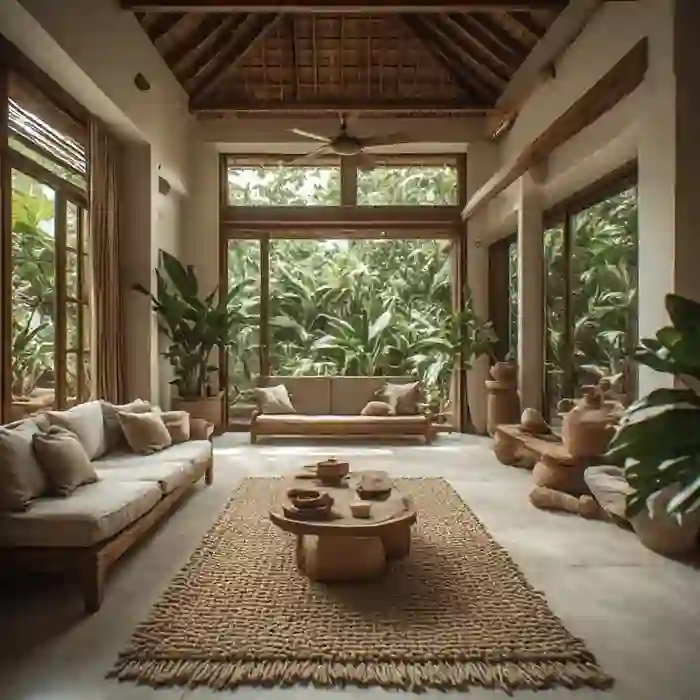
The right rug size depends on the furniture arrangement, the proportions of the room and how you want the seating area to read visually.
For a living room, a useful starting point is to choose a rug large enough to connect the main seating pieces rather than leaving a small island beneath the coffee table.
Common approaches include:
- All front furniture legs on the rug: creates a unified seating arrangement.
- All furniture legs on the rug: establishes a more generous, integrated living area.
- Coffee table only: can work in compact rooms, provided the rug still feels proportionate.
In tropical open-plan homes, a correctly sized rug can define a lounge area without blocking the visual connection to a terrace or garden.
Measure the furniture layout before buying, and use masking tape on the floor to test the proposed dimensions.
What Is the Best Way to Style a Rug in a Tropical Interior?
The most effective approach is to let the rug connect the room’s materials, colours and spatial layout.
Start by identifying the dominant elements: flooring, furniture, natural light and architectural features. Then decide whether the rug should blend in, introduce contrast or become the main visual feature.
A few practical principles help:
- Use texture when the room already contains strong colours or patterns.
- Use a controlled geometric design to bring order to organic materials.
- Choose a larger rug when the aim is to unify a generous seating arrangement.
- Introduce botanical motifs selectively rather than repeating them throughout the room.
- Test colours in natural daylight.
- Avoid excessive layering if humidity and maintenance are concerns.
The rug does not need to match everything. It needs to make the different elements feel as though they belong in the same space.
Frequently Asked Questions About Rugs for Tropical Climates
What is the best rug material for a hot and humid climate?
There is no single best material for every tropical environment. Lightweight cotton rugs may suit dry, well-ventilated rooms, while suitable synthetic indoor-outdoor rugs can be useful in areas exposed to splashes and heavy traffic. The correct choice depends on moisture exposure, construction and maintenance.
Are jute rugs suitable for humid weather?
Jute rugs can work in relatively dry, well-ventilated interiors, but they are not ideal for persistently damp rooms or areas exposed to frequent wetting. Prolonged moisture can damage natural fibres and contribute to odours or mould-related problems.
Are flatweave rugs better for tropical homes?
Flatweave rugs are often practical because of their low profile, relatively light visual appearance and suitability for furniture and circulation areas. However, their performance still depends on the fibre, backing and care instructions.
Can I put a rug on a tiled floor in a tropical climate?
Yes. Rugs can work well on ceramic, porcelain and other tiled floors. Make sure the rug and any pad are compatible with the floor finish, prevent unwanted movement and inspect the underside periodically if humidity is high.
Are indoor-outdoor rugs suitable for tropical rain?
Only if the particular rug is designed for the expected exposure. Some indoor-outdoor rugs tolerate splashes and occasional moisture but are not intended to remain wet or exposed to heavy rain. Always check the product specifications and allow the rug to dry properly.
Which rug colours are best for tropical interiors?
Natural beige, sand, stone, olive green, terracotta and muted blue are versatile choices. The best colour depends on the architecture, flooring, daylight and desired atmosphere. Darker or patterned rugs may disguise some everyday marks better than very pale, plain designs.
Should I avoid rugs in tropical bathrooms?
In bathrooms that regularly become wet, it is generally better to avoid moisture-sensitive decorative rugs. If a rug is necessary, choose a product specifically designed for wet or high-moisture conditions, with appropriate slip resistance and cleaning requirements.
How often should I clean a rug in a tropical home?
Cleaning frequency depends on traffic, dust, pets, ventilation and the rug’s material. Vacuum or clean it according to the manufacturer’s instructions, deal with spills promptly and inspect the underside periodically. In humid conditions, ensuring the rug dries fully after cleaning is especially important.
The Right Rug Is the One That Belongs to Its Environment
Tropical interiors do not need to rely on obvious botanical prints or bright coastal colours to express their identity.
A natural woven surface can echo the surrounding landscape. A geometric pattern can reinforce the architecture. A mineral blue can suggest water, while a muted green connects the room to the vegetation beyond its windows.
But the rug also has to work in the real conditions of the space: humidity, ventilation, sunlight, foot traffic and everyday maintenance.
That is what makes the choice interesting. The best rugs for tropical climates combine material suitability with a clear visual purpose.
A rug should feel good underfoot, make sense on the floor and contribute to the atmosphere of the room. When those three things come together, it does more than decorate a tropical interior. It helps the space feel as though it belongs exactly where it is.