
A room can look completely different without changing a single piece of furniture.
The sofa is still there. The walls have the same colour. The curtains hang in exactly the same place. Nothing has moved.
And yet, in the morning, the room may feel fresh and spacious. At sunset, it can become warm and intimate. Under artificial light at night, the same space might suddenly feel colder, flatter, or even slightly unfamiliar.
So why does the same room look different under different light?
Because light does not simply illuminate a room.
Light changes how we perceive it.
It reveals some colours and suppresses others. It creates shadows, alters proportions, changes the apparent texture of materials and influences the emotional atmosphere of a space.
The room remains the same.
Our experience of it does not.
Light Is Part of the Room
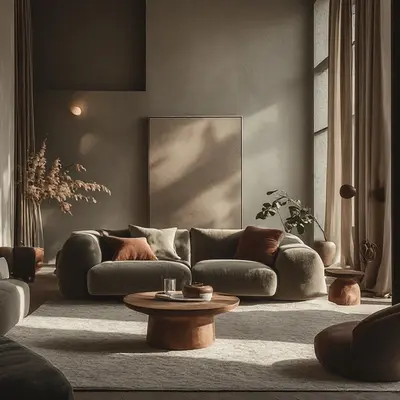
When we think about interior design, we tend to separate objects from light.
We choose a wall colour. We select a fabric. We place a chair near a window.
Then we think about lighting.
But visually, these elements are never completely separate.
A velvet curtain under soft afternoon light is not perceived in quite the same way as that curtain under a cool LED source. A dark wall can feel deep and atmospheric in directional light, but unexpectedly flat when illuminated evenly from above.
Light becomes part of the material.
It interacts with every surface it touches.
This is one of the reasons a colour that looked perfect in a showroom can appear completely different at home.
The paint has not changed.
The light has.
The Same Colour Can Tell a Different Story
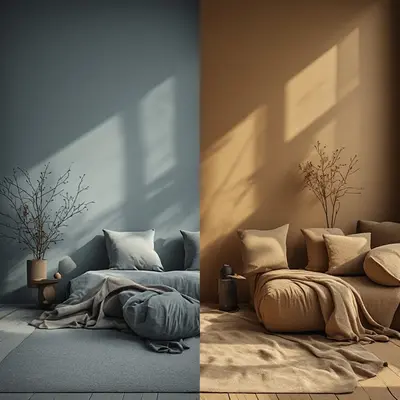
Colour is particularly sensitive to light.
Natural daylight changes throughout the day. Morning light can be relatively soft and cool, while late afternoon light often becomes warmer. On an overcast day, colours may appear more muted and neutral.
Artificial lighting introduces another layer.
A warm light source can make beige, cream, terracotta and brown tones appear richer and more inviting. It can also push certain colours towards yellow or orange.
Cooler light can make whites appear crisper and blues and greens more pronounced.
This does not mean that one type of light is better than another.
It means that colour cannot be fully understood without considering the light around it.
A fabric, wall or piece of furniture has a visual identity, but light participates in how that identity is perceived.
Why White Walls Are Not Always White
White is often treated as a neutral colour.
In reality, white can be surprisingly expressive.
A white wall beside a large window may reflect the changing colours of the sky. At midday, it can feel bright and almost weightless. Near sunset, it may pick up warmer tones.
At night, the same wall can become yellowish under a warm light source or slightly grey under a cooler one.
This is why two rooms painted in the same white can feel completely different.
The surrounding environment matters too.
A green garden outside the window can subtly influence the atmosphere of a room. A brick building opposite the window may introduce warmer reflections.
The wall is not simply receiving light.
It is receiving the world outside the window.
Shadows Change the Shape of a Space
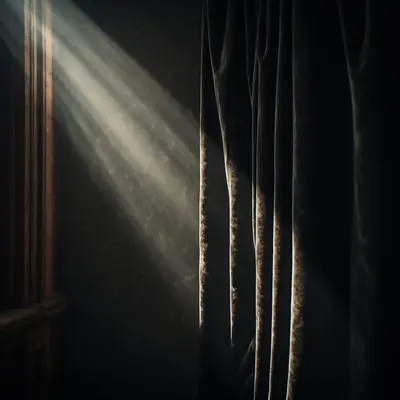
Light does more than change colour.
It also changes the way we read shape and depth.
Imagine a room illuminated almost entirely from the ceiling.
The light is fairly even. There may be few dramatic shadows. Furniture becomes easy to see, but the space can also feel visually flatter.
Now imagine the same room illuminated from the side.
The sofa casts a shadow. The texture of the wall becomes more visible. The edges of furniture become more pronounced.
Suddenly, the room has more depth.
This is one of the quiet powers of directional lighting.
Shadows give objects a sense of volume.
They can make a textured surface feel tactile. They can make architectural details appear deeper. They can also create areas of darkness that make the illuminated parts of the room more noticeable.
A room without shadows can sometimes feel like a photograph with all the contrast removed.
Technically visible.
Visually less interesting.
Texture Appears When Light Moves Across It
Some materials are especially dependent on the direction of light.
Velvet is an obvious example.
Its surface contains tiny fibres that reflect light differently depending on their direction. Move the light, and the fabric can appear lighter, darker, softer or more luminous.
Pleated curtains behave in a similar way.
Under frontal light, their folds may become relatively subtle. With light coming from the side, every fold can create a small succession of highlights and shadows.
Glossy surfaces behave differently again.
They may reflect the light source itself rather than simply showing their own colour.
This is why materials should never be evaluated only by looking at them under one lighting condition.
A material has a relationship with light.
And that relationship is part of its visual character.
Natural Light Creates a Moving Interior
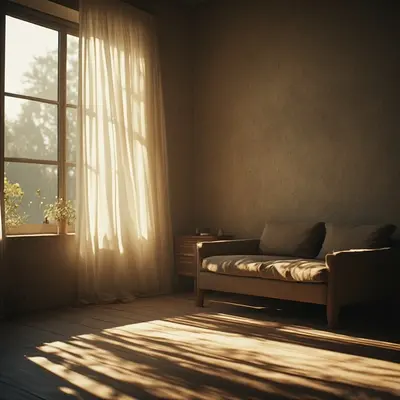
Natural light is never completely static.
It travels.
It changes direction.
It becomes stronger and weaker.
Clouds pass across the sky. Trees move outside the window. The sun shifts across the room.
As a result, an interior illuminated by daylight is constantly changing.
In the morning, light may enter horizontally through a window and stretch shadows across the floor.
Later, the same sunlight may reach a different wall.
In the evening, the room may receive very little direct sunlight but become filled with a softer, warmer glow.
The furniture has not moved.
The composition of the room has.
This is particularly interesting from a visual design perspective.
A window is not simply an opening that provides brightness. It is a constantly changing light source that can transform the appearance of the entire interior.
Why the Same Room Can Feel Bigger or Smaller
Light can also influence our perception of space.
Bright, evenly illuminated surfaces tend to feel more open and visually accessible. Strong contrasts between light and dark areas can create a more dramatic sense of depth.
A dark corner can make a room feel intimate.
A brightly illuminated wall can draw the eye towards the far side of the room and make the space feel more expansive.
The effect is not purely mathematical.
It is perceptual.
We read a room through relationships: light and shadow, foreground and background, visible and concealed.
This means that lighting can subtly influence how large, narrow, deep or enclosed a room appears.
Sometimes, changing the light can transform the perceived space more effectively than changing the furniture.
Warm Light Is Not Always Cosy

Warm lighting is often associated with comfort.
And, in many interiors, it works beautifully.
But warmth alone does not automatically create atmosphere.
A very warm light placed directly above a room can create harsh shadows and make colours look muddy. A warm light with poor colour rendering can make carefully selected materials lose some of their visual complexity.
Atmosphere depends on more than colour temperature.
It also depends on direction, intensity, contrast and distribution.
A small warm lamp in a dark corner can create a beautiful pool of light.
The same colour of light spread uniformly across the ceiling may feel much less atmospheric.
The difference is not the warmth.
It is the way the light behaves.
Why Light Matters So Much in Interior Styling
For an interior stylist, lighting is not simply something to consider after the room has been decorated.
It should be part of the visual composition from the beginning.
A room may contain beautiful furniture, carefully selected textiles and a sophisticated colour palette.
But if the lighting works against them, their qualities may disappear.
A textured wall can lose its relief.
A beautiful fabric can look flat.
A carefully chosen colour can become something else entirely.
Conversely, the right light can reveal qualities that were almost invisible before.
A rough surface becomes tactile.
A dark colour gains depth.
A metallic detail catches the eye.
A curtain becomes almost sculptural.
Good lighting does not necessarily make a room brighter.
Sometimes, it simply makes the room more visible.
Look at the Room at Different Times
One of the simplest ways to understand how light affects an interior is to observe the same room throughout the day.
Look at it in the morning.
Then around midday.
Again in the late afternoon.
And finally at night with the artificial lights switched on.
Do not immediately ask whether the room looks “better”.
Instead, look for what has changed.
Which colours became warmer?
Which surfaces became darker?
Where did the shadows appear?
Which object suddenly attracted your attention?
Did the room feel deeper?
Did a particular fabric become more interesting?
Did a corner disappear?
This kind of observation can reveal more than simply switching between different light bulbs.
It teaches you to see the room as a changing visual environment.
The Room Has Not Changed. Your Light Has.
Perhaps this is the most interesting thing about interior lighting.
We often think of a room as something fixed.
Four walls. A floor. A ceiling. Furniture. Objects.
But light makes the interior unstable in the best possible sense.
It allows the same space to have different moods without physically changing its contents.
Morning can make it feel open.
Afternoon can reveal its textures.
Sunset can soften it.
Night can turn it into something more intimate and theatrical.
This is why the same room looks different under different light.
Light does not merely show us the room. It interprets it.
And once you start paying attention to that interpretation, interiors become much more interesting.
You stop seeing light as something that simply allows you to see.
You begin to see it as part of the design itself.
Final Thought
A room is never only the objects inside it.
It is also the shadows between them, the reflections on their surfaces, the colour of the light falling across them and the parts that remain just outside the brightest area.
Change the light, and you change the visual conversation between everything in the room.
The architecture stays.
The furniture stays.
The materials stay.
But the atmosphere moves.
And sometimes, that is enough to make the room feel entirely new.