
Not the art of making every room look expensive. Not the art of filling empty corners with fashionable accessories. And certainly not the art of disguising a property’s imperfections.
Home staging is the art of making a property’s potential visible. It transforms an unfamiliar space into an environment that feels understandable, inviting and full of possibility.
At Kaotika, we see it as a form of visual storytelling. Every room offers clues. The challenge is to arrange them into a story that allows buyers to picture themselves becoming part of it.
A Property Is More Than Its Floor Plan
When buyers visit a property, they are assessing practical things: the size of the rooms, storage, natural light, circulation and condition. But their experience is not entirely rational.
They also notice how a room feels.
Can they imagine having breakfast by that window? Does the living room seem suited to quiet evenings or lively gatherings? Does the bedroom feel restful? Is there a place to work, read or simply pause?
These impressions influence how people understand a property and whether they feel drawn to it.
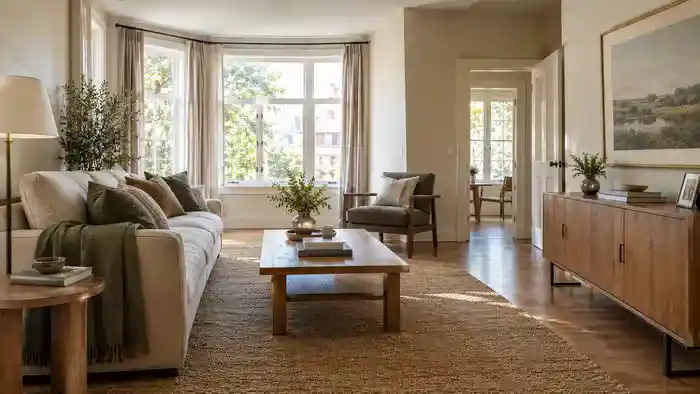
An empty room can be difficult to interpret. Without furniture, its proportions may seem unfamiliar, and its purpose may be unclear. A furnished room can communicate scale, function and atmosphere almost immediately.
The goal is not to tell buyers exactly how they must live. It is to give them enough visual information to imagine the possibilities for themselves.
That distinction matters. Good home staging opens the door to imagination rather than dictating what should happen behind it.
The First Impression Begins Before the Front Door
The experience of a property starts earlier than many sellers realise.
Online photographs, listing images and the first view from the entrance establish expectations before a potential buyer has explored the space. If the presentation feels confusing, cluttered or disconnected, the property may struggle to capture attention.
Home staging brings visual consistency to this first encounter.
A clear entrance, an uncluttered living area, balanced furniture arrangements and thoughtful lighting help the property feel coherent. Each room should make sense on its own while contributing to the impression of a considered whole.
This does not require a grand gesture. Sometimes the most effective change is removing a piece of furniture that interrupts the view across a room. Sometimes it means opening the curtains, repositioning a chair or replacing a collection of small decorative objects with a single, more deliberate arrangement.
The objective is to make the property easier to read — visually, spatially and emotionally.
Empty Rooms, Lived-In Homes and the Space Between
There is no single approach to home staging. The right strategy depends on the property, its condition, its target market and the way it will be presented.
Staging an empty property
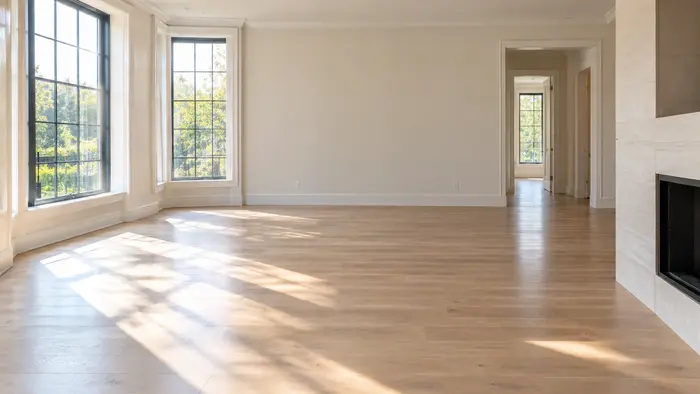
An empty property offers a blank canvas, but blankness is not always an advantage.
Without visual references, buyers may find it difficult to judge the scale of a room or understand how furniture might fit. Carefully selected furnishings can establish proportion, define functional areas and create a sense of flow.
A dining table can clarify the relationship between a kitchen and living area. A bed can reveal the practical dimensions of a bedroom. A rug and a pair of chairs can turn an undefined corner into a reading space.
The key is restraint. Furniture should explain the room, not compete with it.
Staging an occupied home
A home that is still being lived in presents a different challenge. Personal belongings, everyday routines and accumulated furniture can obscure the property’s strongest features.
The solution is not to remove every trace of life. It is to edit the visual information.
Reducing clutter, simplifying shelves, clearing work surfaces and creating breathing room around key pieces of furniture can make a significant difference. Personal photographs and highly individual decorative choices may be reduced so that buyers have more freedom to imagine their own lives in the space.
The home should feel cared for, not stripped of all character.
Staging with what is already there
A successful transformation does not always require new furniture.
Existing pieces can often be rearranged to improve circulation, establish focal points or make a room feel more balanced. Textiles, lighting, artwork and a few carefully chosen accessories can then reinforce the atmosphere.
Working with what is available can also help sellers control costs while making meaningful improvements to the property’s presentation.
The question is not how much can be added. It is what needs to change for the space to make sense.
Furniture Placement: Giving the Room a Reason to Exist
Furniture does more than fill space. It establishes relationships between objects, people and architecture.
A sofa positioned directly in front of a doorway can interrupt movement. A dining table that dominates a compact room can make the entire space feel smaller. Furniture pushed against every wall may leave the centre of a room looking strangely exposed, while oversized pieces can overwhelm the architecture.
Good staging begins by observing how the room works.
Where does the eye naturally travel? Which features deserve attention? How do people enter, move through and use the space? Is there a window, fireplace, architectural detail or view that could become a focal point?
Once these questions have been answered, furniture placement becomes a way of guiding both movement and attention.
The arrangement should feel natural rather than overly designed. Buyers need to understand how the space functions without feeling as though every centimetre has been choreographed.
A well-staged room offers clarity. It allows the architecture to breathe.
Light and Colour: Creating the Right Atmosphere
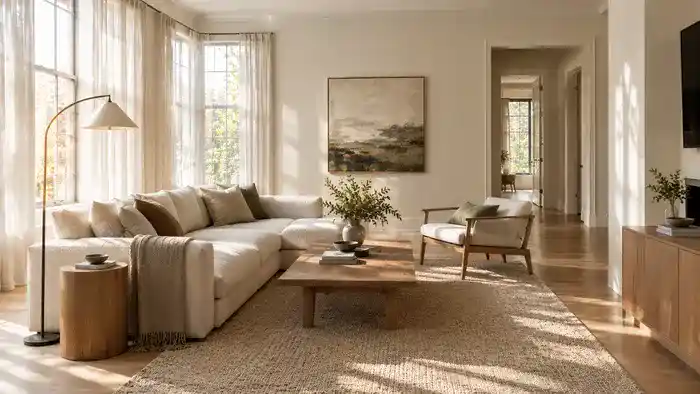
Light changes how we perceive almost everything: the proportions of a room, the colour of its surfaces, the texture of its materials and even its apparent temperature.
Natural light should be allowed to work wherever possible. Clean windows, open curtains and unobstructed views can help a room feel brighter and more connected to its surroundings.
Artificial lighting deserves equal attention. A single overhead light can flatten a room, while a combination of ambient, task and accent lighting can introduce depth and make the space feel more welcoming.
Colour works in a similar way.
A neutral palette can help create visual continuity, but neutral does not have to mean colourless or anonymous. Warm whites, muted greens, soft earth tones and carefully balanced contrasts can give a property personality without overwhelming its architecture.
The aim is not to follow a universal formula. It is to find an atmosphere that suits the property and allows its strongest features to remain visible.
In a coastal apartment, that might mean light-filtering fabrics and a restrained palette inspired by the landscape. In a mountain retreat, textured wool, natural timber and layered lighting may communicate comfort. In a compact urban home, lighter surfaces and a more controlled arrangement may help the rooms feel open and connected.
The atmosphere should belong to the property, not simply to the latest trend.
Styling Without Overstyling
Decorative accessories can give a room its final layer of character. They can also become a distraction.
Too many cushions, carefully scattered ornaments, elaborate table settings and accessories placed in every available corner can make a property feel artificial. Instead of helping buyers imagine themselves at home, the styling draws attention to itself.
The most effective compositions often contain fewer elements, selected with greater intention.
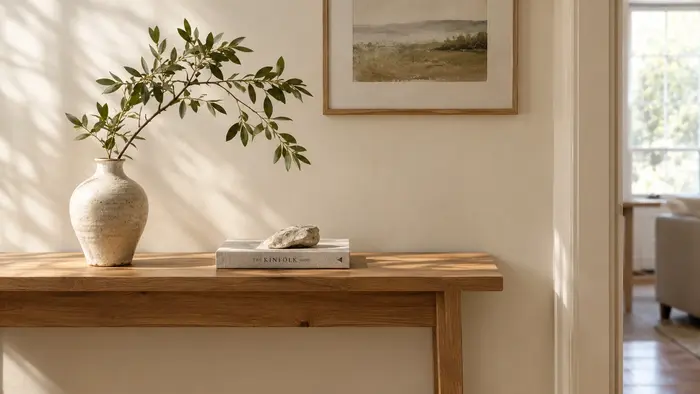
A branch in a sculptural vase. A piece of artwork that relates to the room’s proportions. A folded throw that introduces texture. Books arranged to add colour without creating visual noise.
These details work because they contribute to a larger composition.
In visual storytelling, every element has a role. Some establish the mood; others provide contrast or direct attention. Some are best left out altogether.
The goal is not perfection. It is coherence — a feeling that the room has come together naturally, even when every decision has been considered.
Home Staging Is Not Interior Design — Although They Share a Language
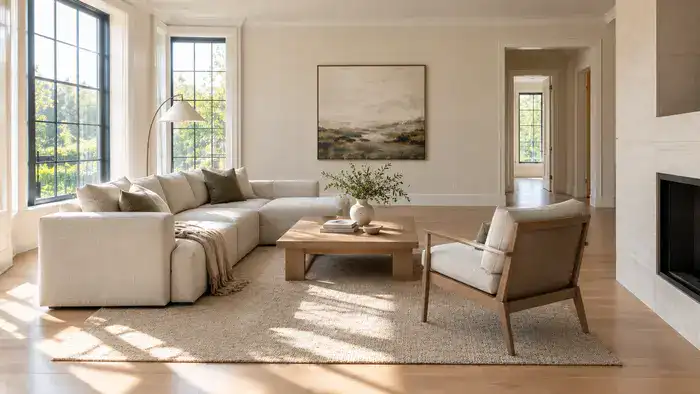
Home staging and interior design use many of the same tools: furniture, colour, lighting, textiles, materials and spatial composition. Their objectives, however, are different.
Interior design generally responds to the needs, preferences and daily life of the people who will use a space over time. Home staging prepares a property for the market, helping a broad range of potential buyers understand its features and imagine its possibilities.
This difference influences every decision.
A highly personal interior may be beautiful but difficult for some buyers to relate to. A staged property usually benefits from a more balanced visual identity, one that feels distinctive without becoming restrictive.
That does not mean every staged home should look the same. On the contrary, effective staging should respond to the property’s architecture, location, natural light and likely audience.
A historic townhouse, a contemporary apartment and a tropical holiday rental should not tell identical stories.
The skill lies in finding the right story for each one.
Why Home Staging Matters in Property Photography
For many buyers, the first viewing happens on a screen.
Property photographs must communicate the layout, scale, light and atmosphere of a space within seconds. When rooms are cluttered, furniture is poorly positioned or lighting is inconsistent, even a promising property can be difficult to appreciate.
Home staging and real-estate photography therefore work best as complementary disciplines.
Staging prepares the visual scene. Photography translates that scene into images that potential buyers can explore before deciding whether to visit.
The relationship between the two requires careful judgement. Wide-angle photography can help explain a room, but excessive distortion may misrepresent its proportions. Brightness can make an interior inviting, but unnatural editing can create expectations that the property itself cannot meet.
The objective is to present the property at its best while remaining faithful to reality.
A well-prepared room gives the photographer a stronger starting point. A considered photographic approach then ensures that the staging reads clearly, from the first image in the listing to the final detail shot.
Does Home Staging Increase a Property’s Sale Price?
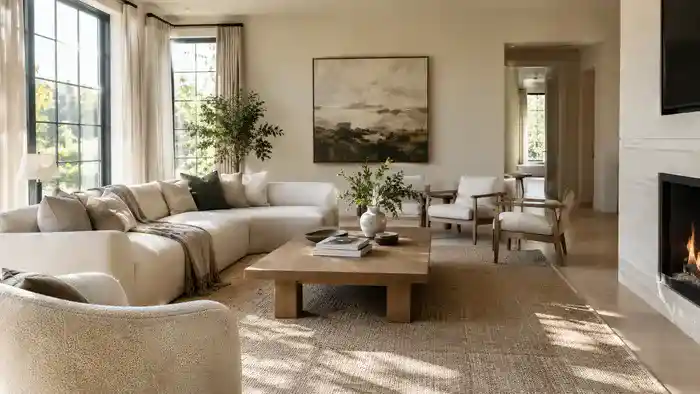
Home staging can improve how a property is presented, help buyers understand its potential and support a more compelling marketing campaign. However, it cannot guarantee a higher sale price or a faster sale.
Results depend on several factors, including location, asking price, market conditions, property condition, buyer demand and the quality of the presentation.
It is also important to distinguish between making a property more appealing and concealing a problem. Staging cannot compensate for serious maintenance issues, structural defects or an unrealistic asking price.
Its value lies in removing avoidable barriers to understanding the property.
When buyers can see how a room functions, appreciate its proportions and connect its atmosphere with their own aspirations, they have a clearer basis for deciding whether it is right for them.
That is a meaningful contribution, even when the final outcome depends on factors beyond the staging itself.
A Practical Home Staging Checklist
Before photographing or showing a property, step back and look at it as someone unfamiliar with the space would.
- Clarify the purpose of each room. Make sure its main function is immediately understandable.
- Edit rather than simply add. Remove unnecessary furniture, clutter and decorative distractions.
- Improve circulation. Ensure that doors, windows and natural walking routes are unobstructed.
- Make the most of natural light. Clean windows, open curtains and review anything blocking the light.
- Layer artificial lighting. Use a considered combination of general, task and accent lighting where appropriate.
- Create visual continuity. Let colours, materials and decorative choices relate to one another across the property.
- Highlight genuine strengths. Draw attention to architectural details, views, generous proportions or useful features.
- Keep styling believable. Use accessories to establish atmosphere, not to construct an unrealistic fantasy.
- Prepare for photography. Check the view from each doorway and consider how rooms will appear from the camera’s perspective.
- Review the entire property. Make sure the entrance, living areas, bedrooms, bathrooms and outdoor spaces feel like parts of the same story.
One final test is particularly useful: if a decorative element does not improve the room’s function, visual balance or atmosphere, does it really need to be there?
Sometimes the most effective styling decision is the one that leaves something out.
Frequently Asked Questions About Home Staging
What is home staging?
Home staging is the process of preparing a property for sale or rent by improving its presentation through furniture arrangement, decluttering, lighting, colour and decorative styling. Its purpose is to help potential buyers or tenants understand the space and visualise its potential.
What is the main purpose of home staging?
The main purpose of home staging is to make a property’s strengths easier to recognise and its spaces easier to imagine using. It creates a clear, appealing presentation that supports property marketing without misrepresenting the home’s actual condition.
Does home staging work for empty properties?
Yes. Staging an empty property can help communicate room proportions, establish functional areas and demonstrate how furniture might fit. It can be particularly useful when buyers struggle to interpret empty rooms from photographs or during viewings.
Can you stage a home without buying new furniture?
Yes. Many effective home staging projects use existing furniture, rearranged to improve circulation and visual balance. Decluttering, adjusting lighting, simplifying accessories and introducing a few carefully chosen textiles or decorative elements can also transform a room without a complete refurnishing.
Is home staging worth the cost?
Home staging may be worthwhile when the expected improvement in presentation justifies the investment. The appropriate budget depends on the property, its target market, the work required and the available marketing budget. A focused consultation or partial staging can be more appropriate than a full furnishing project.
What is the difference between home staging and interior styling?
Home staging prepares a property for the real-estate market, with an emphasis on broad appeal, clear spatial understanding and market presentation. Interior styling focuses on the visual composition of a space through furniture, lighting, textiles, colour and decorative objects. Styling techniques are often an essential part of home staging.
Does home staging guarantee a faster sale?
No. Home staging cannot guarantee a sale or a particular timeframe. Its effectiveness depends on factors such as pricing, location, market demand, property condition and marketing quality. It can, however, help present a property more clearly and make its potential easier to appreciate.
Making Possibility Visible
A well-staged property does not need to shout for attention. It needs to communicate clearly.
The furniture establishes the rhythm. Light reveals the architecture. Textures bring depth. A few carefully chosen details suggest how a room might feel when someone makes it their own.
Nothing should feel forced, and nothing should compete unnecessarily for attention.
Because the real art of home staging is not to make a property look like somebody else’s finished home. It is to create enough clarity, atmosphere and visual possibility for another person to begin imagining their own.
A property becomes more than a place to view when people can begin to imagine themselves living there.
And that is where the story begins.