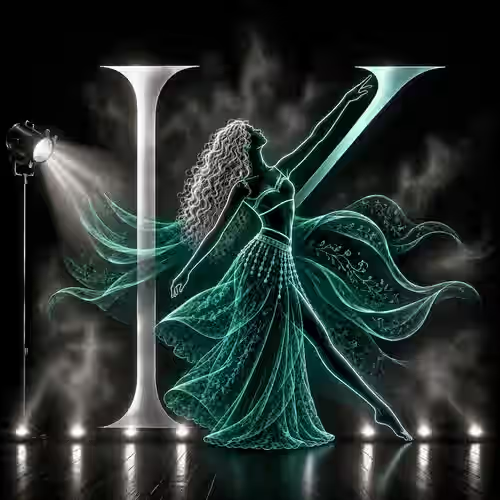
Lighting is far more than simply making a performer visible. In professional stage productions, it becomes an invisible choreographer, guiding the audience’s attention, creating emotional atmosphere, sculpting the body, enhancing costume details, and transforming an ordinary performance into an unforgettable visual experience.
For modern bellydance productions—especially Tribal Fusion, Dark Fusion, Experimental Bellydance, and theatrical performances—understanding the fundamentals of lighting is just as valuable as understanding costume design or choreography.
Every lighting design is built around four essential elements:
- Intensity
- Color
- Direction
- Texture
These four variables can be combined in countless ways to create completely different moods using exactly the same choreography.
Let’s explore each one in depth.
1. Intensity: The Emotional Power of Light
Intensity simply refers to how bright or dim the light appears.
Although it seems like the most obvious parameter, intensity is actually one of the strongest emotional tools available to lighting designers.
A brighter stage generally feels:
- energetic
- open
- powerful
- optimistic
- grand
A darker stage often feels:
- intimate
- mysterious
- sensual
- dramatic
- dangerous
- cinematic
Professional lighting designers rarely use “maximum brightness” during an entire performance.
Instead, they constantly vary intensity to support the emotional arc of the music.
How intensity is controlled
Modern theatres typically use:
- DMX-controlled LED fixtures
- Intelligent moving lights
- Traditional dimmers
- Lighting consoles that create smooth fades
Rather than simply switching lights on and off, professional systems fade gradually between lighting states.
A slow fade can create romance.
A sudden blackout creates surprise.
Fast flashes increase excitement.
Intensity and Bellydance
Modern bellydance usually benefits from medium intensity lighting rather than full brightness.
Why?
Because costumes often include:
- sequins
- metallic embroidery
- crystals
- reflective jewelry
- sheer fabrics
Too much light flattens these details.
A slightly darker environment allows highlights to sparkle naturally.
This is particularly important when dancing with:
- silk veils
- chiffon overskirts
- Isis wings
- metallic accessories
2. Color: Painting Emotion with Light
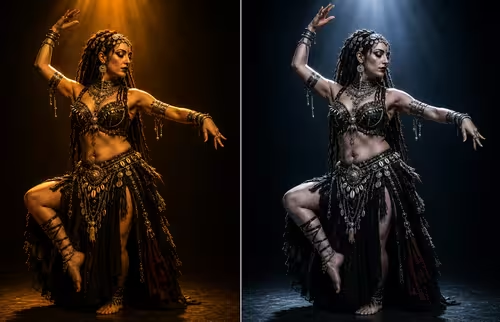
Color is often the first thing audiences consciously notice, yet its influence goes much deeper than aesthetics.
Different colors trigger different psychological responses.
Although there are cultural variations, certain emotional associations appear consistently across audiences.
Warm colors
Red
Creates:
- passion
- danger
- intensity
- aggression
- seduction
Amber
Creates:
- warmth
- nostalgia
- candlelight
- historical atmosphere
Orange
Creates:
- energy
- celebration
- vitality
Cool colors
Blue
Suggests:
- mystery
- moonlight
- melancholy
- elegance
- spirituality
Purple
Often represents:
- luxury
- mysticism
- fantasy
- magic
Green
Can feel:
- supernatural
- eerie
- magical
- organic
Depending on its tone, green can also evoke sickness or decay, making it a favorite in darker theatrical productions.
White light
Pure white light is often underestimated.
Different white temperatures create very different impressions.
Warm white resembles candlelight.
Neutral white appears natural.
Cool white feels modern, sterile or futuristic.
How color is created
Traditional theatres use:
- colored gel filters
- tungsten fixtures
Modern productions increasingly rely on:
- RGB LED fixtures
- RGBW systems
- RGBA fixtures
- RGBAL systems
- RGBL systems
- multi-chip LED technology
These allow almost unlimited color mixing without changing physical filters.
Color in Modern Bellydance
Unlike folkloric bellydance, fusion styles often use cinematic color palettes.
Popular combinations include:
Blue + purple
Creates mystery.
Amber + gold
Enhances metallic costumes.
Deep red + shadow
Creates sensuality.
Cold white + blue
Produces dramatic contemporary looks.
Purple + magenta
Ideal for fantasy-inspired performances.
3. Direction: Sculpting the Human Body

Perhaps the least understood aspect of stage lighting is direction.
The same light can produce entirely different results depending on where it comes from.
Professional lighting is rarely placed directly in front of the performer.
Instead, multiple angles work together to reveal shape and movement.
Front lighting
The most familiar direction.
Advantages:
- reveals facial expressions
- makes performers clearly visible
- ideal for photography
Disadvantages:
- reduces shadows
- flattens muscles
- makes costumes appear less three-dimensional
Side lighting
One of the most important tools for dance.
It emphasizes:
- muscle definition
- hip work
- arm lines
- torso isolation
- body rolls
This is why side lighting is common in contemporary dance and Tribal Fusion.
Top lighting
Light falling directly from above creates:
- dramatic shadows
- mysterious faces
- elegant silhouettes
Excellent for:
- slow choreography
- ritual scenes
- mystical performances
Backlighting
Light from behind separates the dancer from the background.
Especially effective with:
- veils
- chiffon
- smoke
- long skirts
- spinning movements
Backlighting can transform translucent fabrics into glowing sculptures.
Low-angle lighting
Lighting from below is rarely natural.
It creates:
- horror
- surrealism
- theatrical fantasy
Often used in dark productions.
Direction and Bellydance
Modern bellydance often combines:
- soft front light
- powerful side lighting
- strong backlighting
This combination highlights body isolations while allowing flowing fabrics to remain visually dynamic.
4. Texture: Giving Light a Surface
Texture refers to the visual pattern projected by light.
Instead of illuminating a smooth area, textured lighting projects shapes.
These patterns may resemble:
- leaves
- windows
- stained glass
- branches
- smoke
- lace
- clouds
- architecture
- geometric shapes
These projections are usually created using gobos.
What are gobos?
A gobo is a metal or glass template placed inside a spotlight.
The cut-out pattern blocks portions of the beam, projecting intricate designs onto:
- floors
- walls
- curtains
- scenery
- performers
Modern moving-head fixtures often contain rotating gobo wheels.
Other ways to create texture
Texture can also come from:
- haze
- smoke
- layered lighting
- fabric projections
- LED pixel mapping
- projection mapping
- laser effects
Texture in Bellydance

Fusion productions increasingly incorporate textured lighting to reinforce storytelling.
Examples include:
Forest gobos for mystical performances.
Moonlight effects for gothic choreography.
Geometric projections for cyber aesthetics.
Cathedral windows for sacred themes.
Clockwork shadows for steampunk.
Which Lighting Elements Dominate Modern Bellydance Fusion?
Although all four factors are important, modern bellydance productions tend to prioritize:
- Direction
- Color
- Intensity
- Texture
Why?
Because body isolations require sculptural lighting more than extremely bright illumination.
Side lighting often contributes more to visual impact than increasing brightness.
Lighting for Different Dark Bellydance Styles
Each dark subgenre has its own visual language. Lighting is one of the main elements that distinguishes them.
Romantic Dark
Mood:
Elegant melancholy.
Typical colors:
- deep blue
- violet
- soft lavender
- moonlit white
Direction:
- soft side lighting
- gentle backlighting
- subtle top light
Textures:
- cathedral windows
- lace
- branches
- roses
- mist
Overall feeling:
Dreamlike, gothic and poetic.
Cyber Dark
Mood:
Futuristic.
Typical colors:
- cyan
- electric blue
- ultraviolet
- magenta
- neon green
Direction:
- sharp side lighting
- moving beams
- fast backlight changes
Textures:
- grids
- digital patterns
- laser lines
- glitch projections
Overall feeling:
High-tech, energetic and synthetic.
Steampunk
Mood:
Industrial fantasy.
Typical colors:
- amber
- copper
- warm white
- sepia
Direction:
- strong side lighting
- warm backlighting
- low-angle accents
Textures:
- gears
- machinery
- Victorian windows
- steam
- riveted metal
Overall feeling:
Mechanical, adventurous and nostalgic.
Mystic Style
Mood:
Sacred ritual.
Typical colors:
- indigo
- violet
- gold
- deep emerald
Direction:
- overhead lighting
- soft side lighting
- halo-like backlight
Textures:
- sacred geometry
- mandalas
- stars
- celestial patterns
- temple architecture
Overall feeling:
Spiritual, timeless and meditative.
Dark Cabaret

Mood:
Seductive theatrical glamour.
Typical colors:
- crimson
- burgundy
- amber
- warm white
Direction:
- spotlight front lighting
- dramatic side lighting
- rich backlight
Textures:
- velvet curtains
- ornate wallpaper
- art deco motifs
- vintage theatrical patterns
Overall feeling:
Decadent, playful and provocative.
Dark Circus
Mood:
Beautifully unsettling spectacle.
Typical colors:
- red
- deep blue
- antique gold
- stark white
Direction:
- strong follow spots
- dramatic backlighting
- sharp contrasts
Textures:
- striped tents
- carnival motifs
- checkerboards
- aged wood
- weathered canvas
Overall feeling:
Whimsical, eerie and unpredictable.
Dark Victorian
Mood:
Refined gothic elegance.
Typical colors:
- candlelight amber
- burgundy
- deep emerald
- muted ivory
Textures:
- damask
- lace
- stained glass
- antique wallpaper
Direction:
Soft, layered lighting that resembles chandeliers and candlelight.
Dark Fantasy
Mood:
Epic magical worlds.
Typical colors:
- sapphire
- emerald
- amethyst
- silver
Textures:
- forests
- magical runes
- ancient ruins
- stars
- enchanted mist
Direction:
Strong backlighting combined with textured projections creates an immersive fantasy atmosphere.
Industrial Dark
Mood:
Raw mechanical power.
Typical colors:
- cold white
- steel blue
- desaturated green
Textures:
- concrete
- metal grilles
- factory structures
- smoke
Direction:
Hard side lighting with aggressive contrasts enhances the industrial aesthetic.
Understanding Stage Lighting Fixtures
Before discussing lighting design, it is helpful to understand the tools that make it possible. Different lighting fixtures are designed for different purposes, and professional productions rarely rely on just one type.
Fresnel Lights
Named after the distinctive Fresnel lens, these fixtures produce a soft-edged beam that blends smoothly with other lights.
They are ideal for:
- General stage washes
- Smooth transitions
- Soft portraits
- Romantic performances
- Atmospheric scenes
Because their edges are not sharply defined, Fresnels are excellent for creating natural-looking illumination.
Profile Spotlights (Ellipsoidal Fixtures)
Profile fixtures produce a highly controlled beam with crisp edges.
They can:
- Project gobos
- Precisely illuminate one performer
- Create sharp pools of light
- Frame important moments
These are among the most versatile fixtures used in theatres.
Best suited for:
- Solo dancers
- Storytelling moments
- Cabaret performances
- Dramatic entrances
PAR Lights
PAR fixtures create broad, powerful beams.
Although simple in design, they remain popular because they provide intense color washes.
Common uses include:
- Concerts
- Rock-inspired performances
- Industrial productions
- Festival stages
Modern LED PARs have largely replaced traditional halogen versions.
LED Wash Fixtures
These fixtures cover large portions of the stage with even illumination.
Advantages include:
- Full RGB color mixing
- Low power consumption
- Minimal heat
- Fast color changes
- Smooth fades
Most contemporary theatres now rely heavily on LED wash fixtures.
Moving Head Spot
Moving heads can pan, tilt, zoom, rotate gobos, change colors and create animated effects.
These fixtures are responsible for many spectacular concert visuals.
For bellydance they are especially useful during:
- Drum solos
- Dynamic entrances
- Fusion choreography
- Festival finales
Beam Lights
Beam fixtures produce extremely narrow shafts of light.
When haze is present, these beams become visible throughout the venue.
They create:
- Architectural shapes
- Powerful visual energy
- Futuristic environments
They are commonly associated with cyber aesthetics.
Followspots
A followspot is manually operated by a technician who keeps the beam focused on the performer.
Although less common in smaller productions, followspots remain invaluable for:
- Theatre
- Cabaret
- Circus
- Large gala performances
Lighting for Different Bellydance Props
Each dance prop interacts with light differently.
Understanding these differences helps performers and lighting designers achieve far more striking visual results.
Silk Veils
Silk catches backlight beautifully.
Recommended lighting:
- Strong backlighting
- Soft side lighting
- Moderate front light
Avoid excessive frontal illumination, which can flatten the transparency of the fabric.
Chiffon Overskirts
Layered chiffon produces elegant movement under:
- Side lighting
- Warm backlighting
- Gentle top lighting
These angles emphasize flowing volume without making the fabric appear opaque.
Isis Wings
Reflective materials behave differently from sheer fabrics.
Best lighting:
- Bright white backlight
- Strong side beams
- Medium front intensity
Avoid extremely saturated colors that may alter the wings’ metallic appearance.
Veil Fans
Because fan veils move quickly, lighting must enhance motion without creating visual confusion.
Recommended:
- Cool backlight
- Medium side lighting
- Controlled intensity
Slow color fades often work better than rapid changes.
Swords
Metal reflects concentrated highlights.
Spotlights positioned at shallow angles create elegant reflections while avoiding blinding glare.
LED Props
LED wings, fans and poi already emit their own light.
Stage lighting should support rather than overpower these elements.
Lower ambient intensity often produces the best results.
Lighting for Photography vs Lighting for Live Audiences
A common misconception is that lighting designed for the audience automatically produces beautiful photographs.
In reality, the needs are quite different.
Live Audience Priorities
The audience perceives movement, depth and atmosphere.
Lighting may intentionally include:
- deep shadows
- dramatic contrast
- silhouettes
These often look spectacular in person.
Photography Priorities
A camera requires:
- facial detail
- balanced exposure
- accurate skin tones
- manageable contrast
Some theatrical lighting appears stunning live but photographs poorly.
Professional dance photography often requires dedicated lighting adjustments.
Video Recording
Video introduces additional considerations.
Lighting should avoid:
- flickering LEDs
- overexposed highlights
- crushed shadows
- rapidly changing colors
Smooth transitions generally produce more cinematic footage.
Common Lighting Mistakes in Bellydance Performances
Even experienced productions occasionally make lighting decisions that reduce the visual impact of a performance.
Too Much Front Light
This flattens:
- muscle definition
- isolations
- costume texture
The performance loses depth.
Overusing Colored Lighting
Deep red or blue can completely hide costume details.
The audience may struggle to appreciate embroidery, beadwork and fabric textures.
Ignoring Side Lighting
Without side lighting:
- hip work disappears
- body rolls lose definition
- arm pathways become less expressive
Excessive Smoke
Haze enhances beams.
Too much smoke hides performers.
The effect quickly becomes distracting.
Constant Movement
Moving lights should support choreography—not compete with it.
Continuous beam movement can become visually exhausting.
Designing Lighting Around Choreography
Lighting should follow the emotional structure of the dance.
For example:
Intro
Low intensity
Cool colors
Minimal movement
A sense of anticipation.
First Musical Phrase
Gradually increasing brightness.
Soft side lighting.
Gentle backlight.
Drum Solo
Sharper contrasts.
Faster cue changes.
Stronger side lighting.
Dynamic moving heads.
Emotional Slow Section
Reduced intensity.
Cool palette.
Top lighting.
Long fades.
Finale
Higher brightness.
Expanded color palette.
Full-stage illumination.
Powerful backlighting.
The audience experiences visual resolution alongside the music.
Working with a Lighting Designer
Professional collaboration begins long before opening night.
Helpful information to provide includes:
- Music timeline
- Choreography notes
- Costume colors
- Fabric types
- Important dramatic moments
- Props
- Desired emotional atmosphere
- Reference photographs
- Inspiration boards
The more visual information you provide, the easier it becomes for the lighting designer to transform artistic ideas into technical reality.
Creating a Signature Lighting Style
Many successful companies become recognizable through their lighting as much as their choreography.
Developing a signature visual identity may involve consistently using:
- Specific color palettes
- Characteristic side-light angles
- Distinctive gobo patterns
- Preferred levels of contrast
- Recognizable silhouettes
Over time, audiences begin associating these visual choices with your artistic brand.
Just as costume design, music and choreography contribute to a unique identity, lighting can become an unmistakable part of your creative language.
For performers and companies exploring Tribal Fusion, Dark Fusion and theatrical bellydance, lighting is not merely an accessory—it is an artistic partner. When thoughtfully designed, it transforms movement into atmosphere, fabric into sculpture and choreography into an immersive visual narrative that lingers in the audience’s memory long after the final bow.
Final Thoughts
Exceptional stage lighting is never about adding more fixtures or brighter beams. It is about making intentional artistic choices.
By mastering the four pillars—intensity, color, direction, and texture—you can shape the audience’s emotional experience as effectively as choreography, music, or costume design.
For modern bellydance and dark fusion performances, lighting becomes an extension of movement itself. It sculpts the body, animates flowing fabrics, enhances dramatic storytelling, and transforms every performance into a living work of art.
Whether your aesthetic leans toward romantic gothic elegance, futuristic cyber worlds, mystical rituals, theatrical cabaret, or haunting circus performances, understanding these four fundamental elements will allow you to collaborate more effectively with lighting designers—or even plan your own productions with greater artistic confidence.
In the end, dancers move through space, but light gives that space meaning.

