Introduction: When Fabric Learns to Move
Dance does not begin with the first step. It begins earlier—when fabric is chosen, when weight is considered, when texture is allowed to speak. Costume is not an afterthought; it is a silent choreographer. In contemporary fusion dance, what we wear teaches us how to move, where to linger, and when to release.
To dress the body is to sculpt motion.
Costume as Architecture of Movement
The Body Expanded Beyond Skin
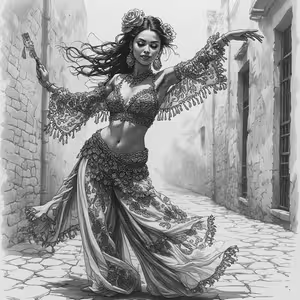
Costume extends the dancer’s physical presence. Skirts widen the hips into space, sleeves stretch arms into lingering echoes, necklaces pull the gaze toward the chest. Movement becomes larger not through effort, but through design.
Practical guidance:
- Choose skirts with enough weight to encourage grounded movement, but not so heavy that they interrupt control.
- Use layered fabrics to add depth and delay to turns and spins.
- Test garments by improvising slowly—notice how they resist or follow your motion.
A well-chosen costume does not follow the body blindly; it negotiates with it.
Contemporary Fusion Dance: Minimalism and Revelation
When Less Fabric Speaks Louder
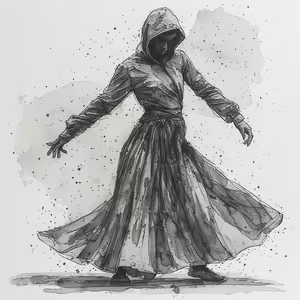
In contemporary dance, costume often appears restrained, but restraint is not neutrality. Tight garments reveal effort and muscular tension. Loose ones delay endings, letting movement breathe beyond the body.
Neutral tones strip narrative, allowing sensation to surface. Asymmetry disrupts expectation. Transparency reveals vulnerability.
Practical guidance:
- Choose fabrics that respond visibly to breath and momentum.
- Avoid unnecessary decoration—ask whether each element serves the movement.
- Experiment with restriction: limited mobility can generate unexpected choreographic choices.
Here, costume becomes a lens—focusing attention on time, weight, and emotional residue.
Where Contemporary Meets Fusion
Hybridity as a Living Language
When minimalism meets cultural or theatrical influences, costume becomes dialogue. Structured tops coexist with raw textiles. Ethnic references dissolve into abstraction. The body carries memory while questioning it.
This fusion invites dancers to embody contradiction: grounded yet suspended, adorned yet exposed, ritualistic yet experimental.
Practical guidance:
- Combine textures thoughtfully—contrast polished metal with organic fabric.
- Let one costume element dominate and others support; avoid visual overload.
- Ask what identity the costume is proposing, and whether the movement agrees.
Fusion costumes do not explain themselves—they provoke curiosity.
The Psychological Threshold of Dressing
Becoming Through Adornment
Putting on a costume is an act of transformation. In contemporary fusion dance, it may feel like stripping away protection, or stepping into a new persona. Either way, costume alters self-perception.
The dancer moves differently when they feel powerful, hidden, exposed, or ceremonial.
Practical guidance:
- Rehearse in costume whenever possible; embodiment changes with clothing.
- Notice how posture, confidence, and emotional tone shift once dressed.
- Choose costumes that support—not fight—the emotional landscape of the piece.
Dance lives not only in muscles, but in mindset.
Conclusion: Constructing Motion, Revealing Meaning
Costume design is choreography made visible. It shapes tempo, clarifies intention, and teaches the dancer how to listen—to gravity, to fabric, to emotion. In contemporary fusion dance, costume is not a mask but a partner.
To construct motion is to honor the dialogue between body and material. When costume and movement align, dance becomes more than motion—it becomes memory, sensation, and transformation suspended in time.